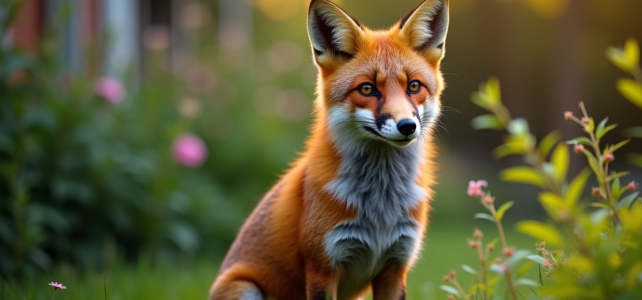
Gardens host a diversity of small carnivores that are often overlooked but are essential to the balance of the ecosystem. Among them, the weasel, the hedgehog, and the fox stand out for their eating habits and behaviors. While the weasel, a keen hunter, primarily preys on rodents and small birds, the hedgehog prefers insects and slugs, thus contributing to pest regulation.
The fox, on the other hand, is an opportunistic omnivore that adapts its diet according to the seasons and availability. Although often perceived as threats to gardens, these small carnivores play a fundamental role in controlling pest populations, helping to maintain a natural balance.
Characteristics of Small Garden Carnivores
Small garden carnivores, such as the weasel, the polecat, and the marten, exhibit distinct characteristics that deserve special attention.
The weasel, belonging to the mustelid family, is an agile and tenacious predator. With an average size of 20 cm, this animal is distinguished by its ability to sneak into the burrows of rodents, which it primarily hunts. Its diet also includes small birds and insects.
The polecat, another member of the mustelids, is often found in wetlands and forests. It measures about 40 cm and has black fur with distinctive white markings on its face. This carnivore is known for its preference for amphibians, small mammals, and birds. It is also one of the few predators of the coypu, a pest imported from South America.
The marten, for its part, prefers forests and wooded areas. It is larger than the weasel, reaching up to 55 cm in length. This carnivore is omnivorous, consuming not only small mammals and birds but also fruits and berries.
Among the other small carnivores one might encounter, the ferret or stone marten is often confused with the marten. However, the ferret is more adaptable to urban and rural environments, where it primarily hunts small mammals and birds.
These animals, although often perceived as nuisances, play a fundamental role in regulating populations of rodents and other pests, thus contributing to the maintenance of ecological balance in our gardens.
Notable Differences Between Species
The distinction between these small garden carnivores is revealed through various aspects: size, habitat, diet, and hunting behaviors.
- Weasel: average size of 20 cm, primarily hunts small rodents by sneaking into their burrows.
- Polecat: about 40 cm, frequents wetlands and forests, feeds on amphibians, small mammals, and birds.
- Marten: up to 55 cm, prefers forests, omnivorous with a varied diet including fruits and berries.
- Ferret: adaptable to various environments, hunts small mammals and birds, often confused with the marten.
Habitat and Distribution
These carnivores occupy distinct ecological niches. The weasel ventures into meadows and gardens, while the polecat prefers wetlands. The marten primarily stays in forests. The ferret, being more opportunistic, adapts to urban and rural environments.
| Species | Habitat |
|---|---|
| Weasel | Meadows, gardens |
| Polecat | Wetlands |
| Marten | Forests |
| Ferret | Urban, rural environments |
Diet
The diet also varies. The weasel and the ferret focus on small rodents and birds. The polecat, in addition to these prey, hunts amphibians. The marten, being more omnivorous, adds fruits to its diet.
These notable differences between species demonstrate their specific adaptation to various habitats and prey, contributing to the regulation of rodent populations and other pests in gardens.