The color of a window in Brittany is not chosen like elsewhere in France. The oceanic climate, exposure to sea spray along the coast, and local urban planning regulations impose technical constraints that narrow the palette of truly viable shades. Understanding these constraints before flipping through a RAL color chart avoids costly mistakes, both aesthetically and in terms of the durability of the joinery.
Reflection coefficient and Breton climate: the thermal constraint that the color chart does not show
Before discussing visual harmony, a technical parameter conditions the choice of color in Brittany: the reflection coefficient of the chosen color. Along the coast, several Breton municipalities now incorporate the notion of a “limited dark palette” for joinery into their facade color charters, imposing minimum reflection coefficients.
The objective is twofold. First, to limit summer overheating, as a dark profile absorbs more solar radiation. Second, to reduce the risk of deformation of PVC and aluminum profiles, especially on facades facing directly west, where late afternoon sunlight strikes at a low angle for long hours in summer.
Specifically, an anthracite gray (RAL 7016), a deep blue, or a bottle green remain permitted in these charters, but on the condition of meeting a reflection threshold. Choosing suitable colors for windows in Brittany therefore requires checking this technical point with the manufacturer or carpenter, and not just validating a color on a screen.
Local regulations in Brittany: protected sectors and muted shades
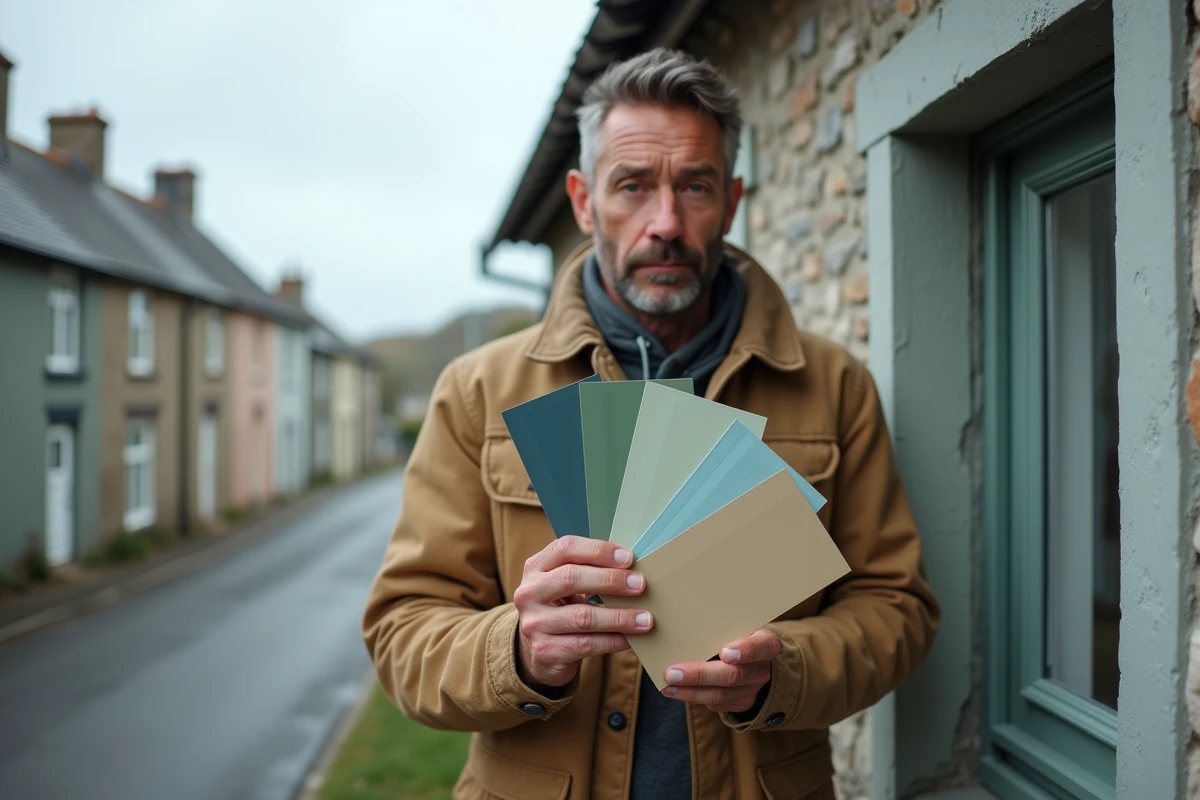
Brittany has several protected sectors (Saint-Malo, Rennes, Vannes) where the UDAP (Departmental Units of Architecture and Heritage) issue binding opinions on joinery colors. Since 2024, these services almost systematically reject overly saturated standard RAL colors, including for contemporary PVC or aluminum windows.
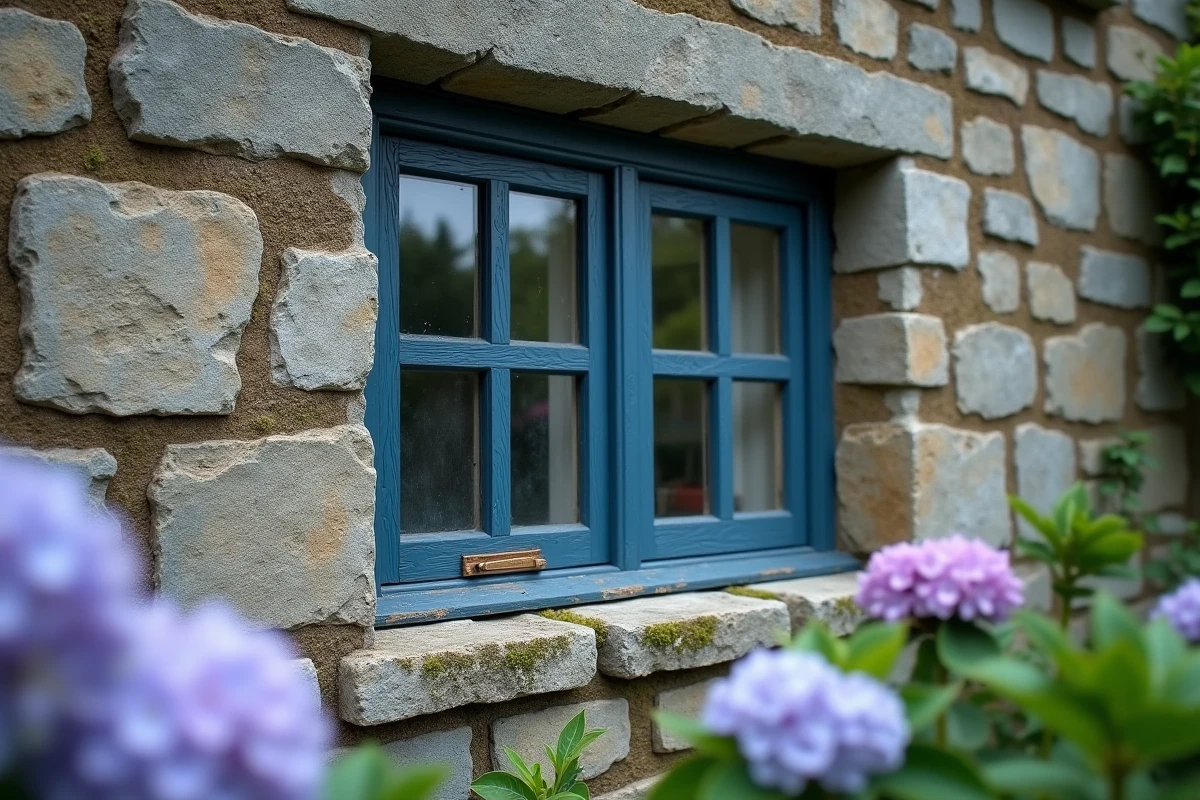
The logic is simple: traditional Breton pigments, made from oxides and earths, produce “muted” shades that are slightly desaturated. A pure blue RAL 5010 has never existed on an old facade in Dinan or Quimper. The UDAP therefore requires shades close to traditional pigments, which leads to grayish blues, muted greens, or slightly creamy whites rather than pure white RAL 9010.
Check before ordering
Any installation of windows visible from the public road requires a prior declaration of work. In protected areas, the opinion of the Architect of the Buildings of France is added. The local carpenter generally knows the accepted palettes, but the applicant remains responsible for compliance.
- Consult the PLU (Local Urban Plan) of the municipality to identify the applicable color prescriptions for the neighborhood
- Request a sample of the colored profile and test it against the facade in natural light, as Breton brightness (often diffuse and gray) alters the perception of shades compared to artificial lighting in a showroom
- Check if the building is located within a historical monument perimeter, which automatically triggers the consultation of the UDAP
Textured finishes on the Breton coast: a choice dictated by sea spray
On the north coast of Brittany (Côtes-d’Armor, Finistère), feedback from recent projects shows a clear shift towards “fine grain” or “sandy” textured finishes for aluminum windows. The reason is pragmatic: smooth glossy lacquers reveal every micro-salt trace and every cleaning scratch, while textured finishes mask them.
This is not just an aesthetic detail. On a facade exposed to prevailing marine winds, salt deposits are almost daily in winter. A smooth lacquered aluminum window in a dark shade will show white marks in just a few weeks without maintenance. The same shade in a sandy finish will remain visually clean much longer between cleanings.
Which material for which finish
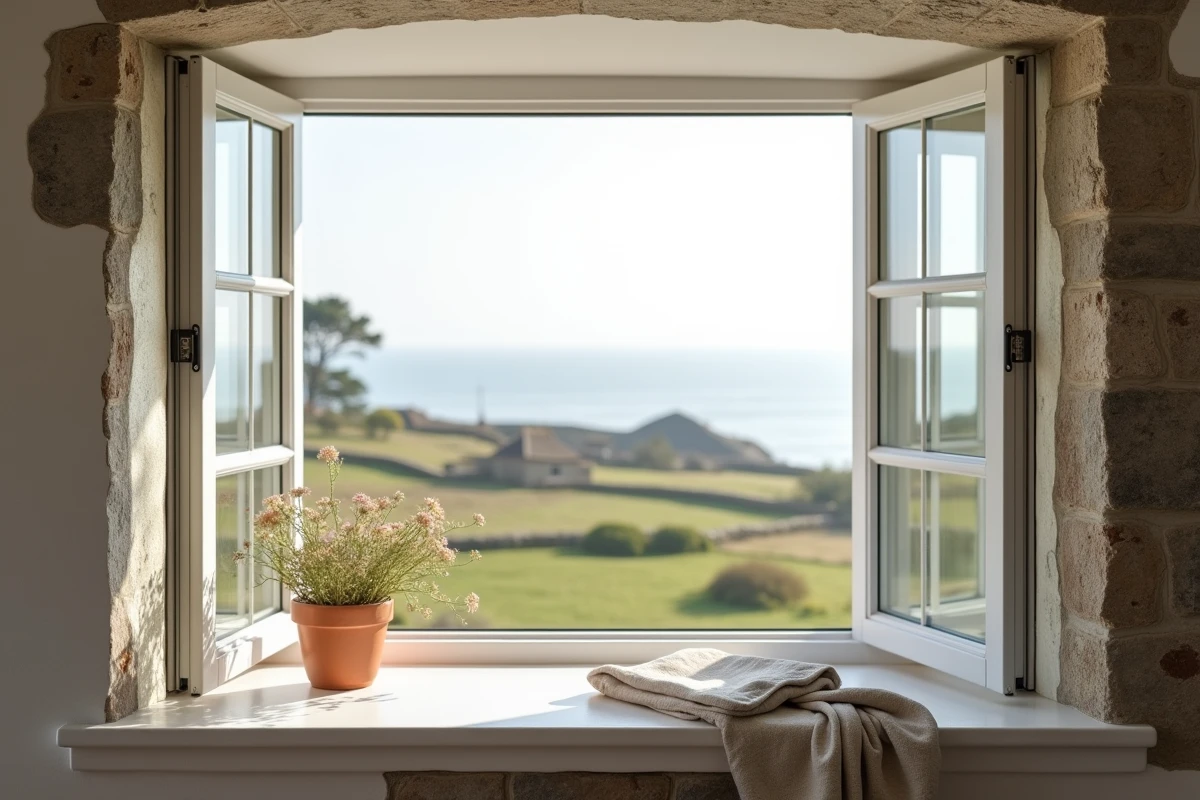
Today, PVC offers coated finishes that imitate wood or reproduce matte textures. Aluminum accepts powder coating in almost all RAL shades with different levels of grain. Painted wood remains the most flexible material in terms of colors, but requires regular maintenance that the Breton climate makes more frequent than in continental areas.
- Coated PVC: wide choice of shades and wood textures, minimal maintenance, but sensitive to thermal deformations in very dark shades
- Powder-coated aluminum: nearly unlimited palette, sandy finishes recommended by the sea, excellent dimensional stability
- Painted wood: total freedom of colors including muted shades, but repainting every five to eight years depending on exposure
- Mixed wood-aluminum: combines the interior warmth of wood and the exterior durability of aluminum, suitable for severe exposure situations
Bicolor and facade-joinery coherence in Breton architecture
Bicolor (one color on the outside, another on the inside) meets a common dual requirement in Brittany. On the street side, respect the palette imposed by the PLU or UDAP. On the interior side, choose a color that matches the decor without being subject to regulatory constraints.
On facades made of Breton granite, naturally gray and cold, muted white or light gray shades create a sober continuity that ages well visually. A too pronounced contrast (black window on light granite) may work on a new construction with a contemporary style, but will often be refused in the renovation of old buildings.
On white or cream-rendered facades, more common in southern Brittany, grayish blues and muted greens add character without falling into the saturation that urban planning services would reject. The association of a window shade with that of the shutters and the gate reinforces overall coherence, provided to stay within the same color family rather than multiplying colors.
The choice of a window shade in Brittany ultimately revolves around three simultaneous axes: local regulatory compliance, technical resistance to the maritime climate, and harmony with existing buildings. Neglecting any of these axes risks an administrative refusal, premature aging, or a disappointing visual result that will be kept for decades.