A poorly calibrated accessory brings an outfit down faster than a badly cut garment. The selection of trendy accessories relies on precise technical choices: proportions, material consistency, color balance. Here we address the methodological points that general guides tend to overlook.
Proportional relationship between accessories and silhouette
The size of a piece of jewelry or a bag is calibrated according to the person’s frame, not according to the current trend. A statement necklace worn on a petite silhouette flattens the bust. A small crossbody bag worn over an oversized coat creates a glaring visual imbalance.
We recommend thinking in terms of accessory-garment volumetric ratio. A substantial piece (wide-brimmed hat, oversized bag, wide belt) works when the garment remains structured and fitted. Conversely, with a loose or fluid outfit, accessories benefit from being slim and graphic.
Body shape also dictates placement. A belt worn at the narrowest point of the bust defines the waist and restructures the silhouette, regardless of the style of the dress or pants. Worn on the hips, it elongates the torso but visually shortens the legs. This positioning is decided based on the desired outcome, not a single aesthetic reflex.
Browsing the accessories on the Mode For You site allows you to spot pieces whose dimensions vary enough to adapt the choice to each body type.
Consistency of materials and finishes in a look
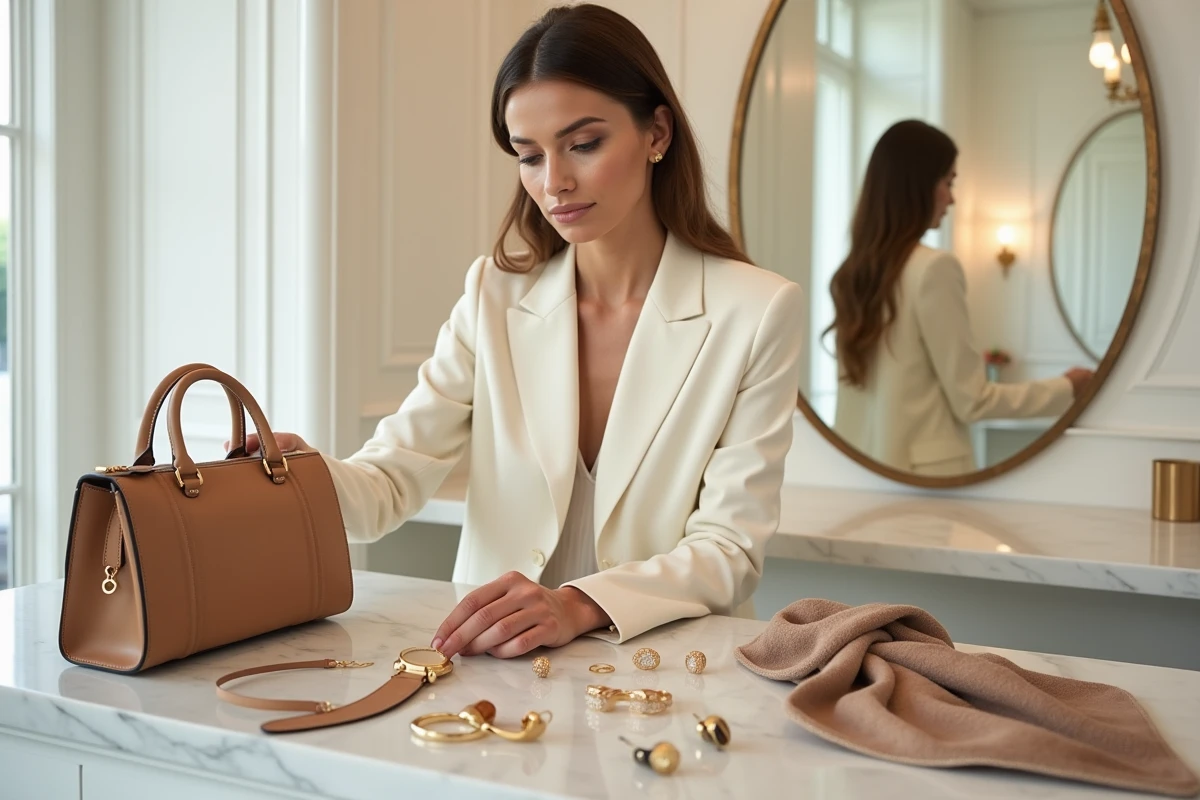
Pairing a matte grained leather bag with shiny polished gold jewelry creates a texture conflict that the eye perceives without always naming it. The finishes of accessories must communicate with each other. Smooth leather with brushed metal, grained leather with satin metal, fabric with wood or horn: these combinations create sensory coherence.
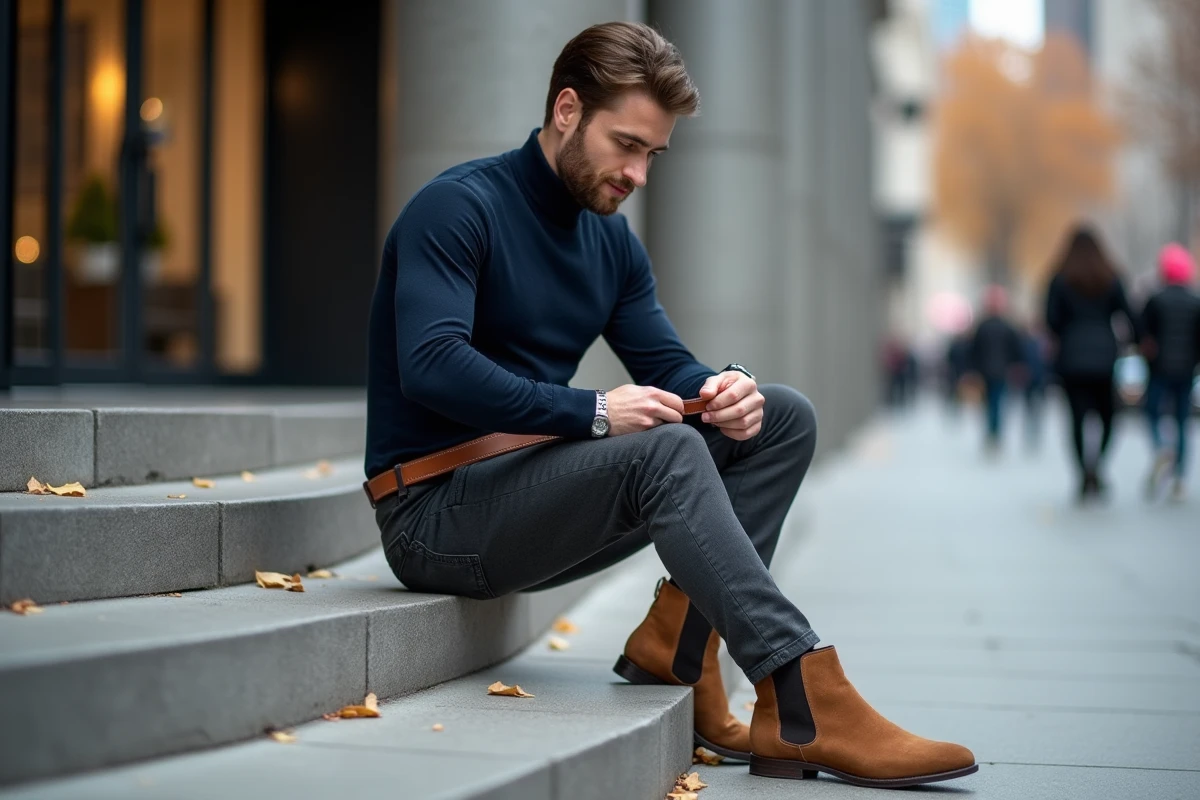
The rule also applies to shoes. A patent leather pump calls for accessories with smooth, reflective surfaces. A suede loafer pairs well with matte and organic textures. When too many different finishes are mixed, the look loses clarity.
Metals and jewelry: limit the palette
Wearing yellow gold, rhodium-plated silver, and aged brass simultaneously creates visual noise. We observe that the most polished outfits limit themselves to a single family of metal, possibly two if one clearly dominates.
- Yellow gold and brass work together due to their common warm tone, provided the thicknesses of the metal remain similar.
- Silver, steel, and platinum share a cool spectrum that naturally pairs with colors like navy blue, gray, or white.
- The gold-silver mix remains viable when only one of the two metals represents the majority of visible surfaces, the other serving only as a discreet accent.
Modular accessories: the trend that changes the wardrobe
Recent collections from several mid-range and high-end brands highlight transformable accessories: a necklace that becomes a belt, a bracelet that extends into a choker, clip-on bag handles, scarves with ring systems. This modularity addresses a dual argument of style and sustainability.
A bag with interchangeable handles shifts from a casual look (canvas crossbody) to a more dressed-up style (gold chain) without multiplying purchases. The cost per use decreases, and the impact on the wardrobe remains minimal.
This type of piece requires special attention to fastening systems. A fragile carabiner or a too-thin ring compromises the whole. Before investing, check the sturdiness of the attachments and the fluidity of the transformation. A poorly designed modular accessory ages faster than a classic fixed piece.
Quiet luxury applied to accessories: sobriety and readability
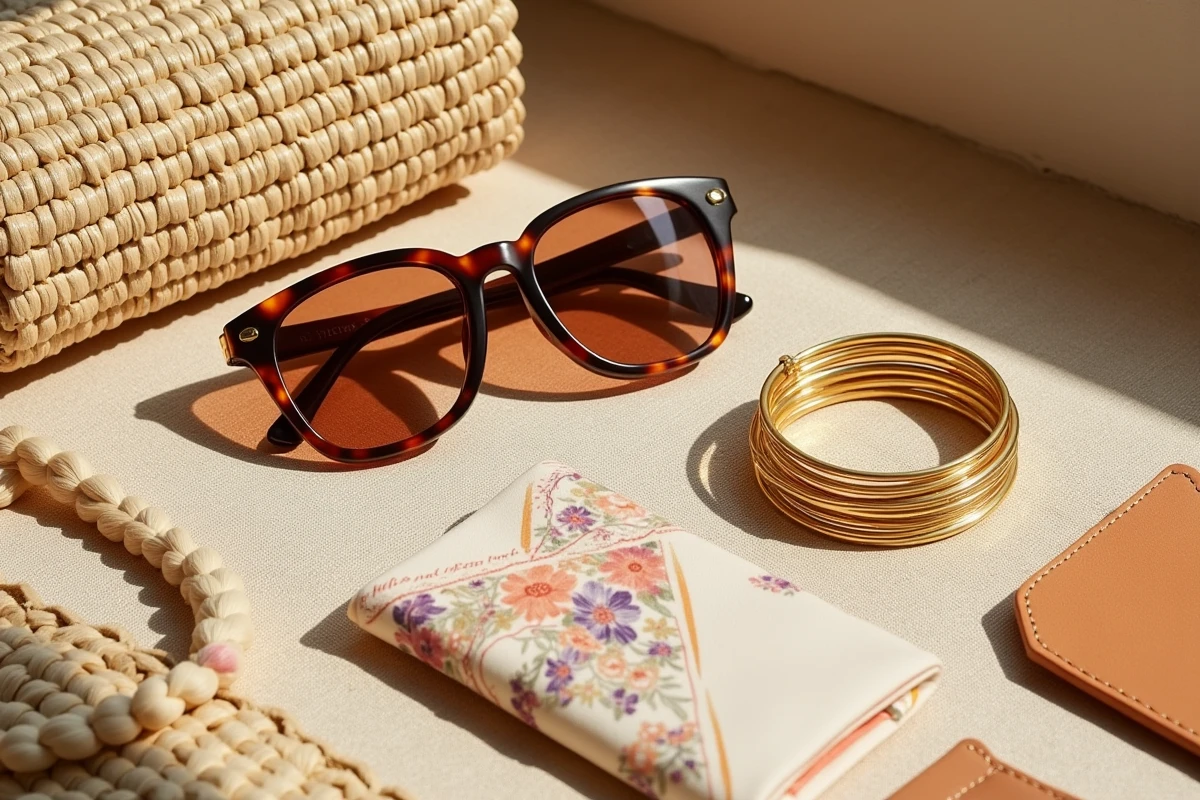
The trend towards quiet luxury is concretely reflected in a decrease in heavily branded pieces in favor of solid surfaces, neutral colors, and clean shapes. A bag without a visible logo, made of good quality leather, communicates more about craftsmanship than about the brand.
This approach imposes a higher standard on finishing details. Without a monogram to “justify” the price, it is the stitching, dyeing, and consistency of the grain that speak. Jewelry follows the same logic: simple geometric volumes, worked surfaces but without superfluous ornamentation.
Adapting quiet luxury to everyday outfits
Quiet luxury does not mean giving up color or contrast. A camel belt on navy pants, an ivory scarf tied around an anthracite blazer: these combinations remain understated while structuring the look. The key lies in limiting the number of visible pieces.
- Two accessories maximum on a casual outfit (watch and belt, or bag and earrings).
- Three pieces on a dressed-up outfit, provided they share the same color or material family.
- No accessory should “shout” louder than the main garment. If the dress carries the look, the accessories accompany it without competing.
The choice of trendy accessories hinges on details of proportion, material, and visual coherence. Three well-calibrated pieces transform an outfit better than ten scattered additions. The modularity and sobriety of finishes allow for building a sustainable accessory wardrobe that transcends seasons without losing relevance.