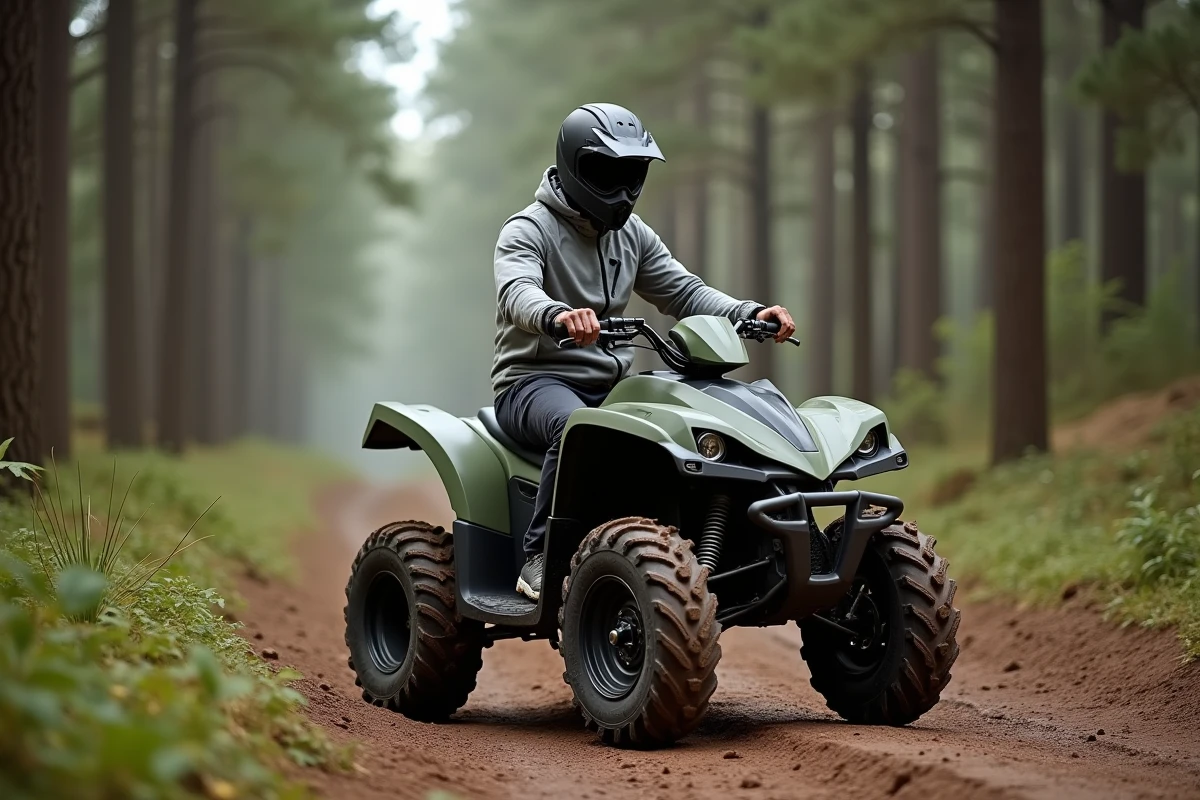
The electric quad market for adults has long been dominated by low-powered recreational models, limited to private land use. Since 2024, the game has changed with the arrival of road-legal machines, modular batteries exceeding usual capacities, and manufacturers targeting both professionals and off-road enthusiasts.
Modular batteries and removable packs: what changes the game for an electric quad
Most buying guides still compare quads equipped with fixed batteries of two to three kilowatt-hours. This perspective is outdated compared to what several manufacturers have been offering since 2024-2025.
Manufacturers like DRR USA (with the Stealth Electric ATV) or the Chinese group Linhai/Feishen are now marketing high-capacity lithium-ion packs, sometimes exceeding 6 kWh, with integrated thermal management and fast charging. The decisive point for daily use is the ability to remove the battery from the quad in a few minutes to replace it with a charged pack, without immobilizing the vehicle.
This “swappable” battery system addresses the main barrier to adoption: range. Rather than waiting several hours for a recharge, a professional user (such as a farmer or a municipal agent) can alternate between two packs and ride all day. To identify the best electric quads for adults on the current market, this technical feature should be prioritized on the product sheet.
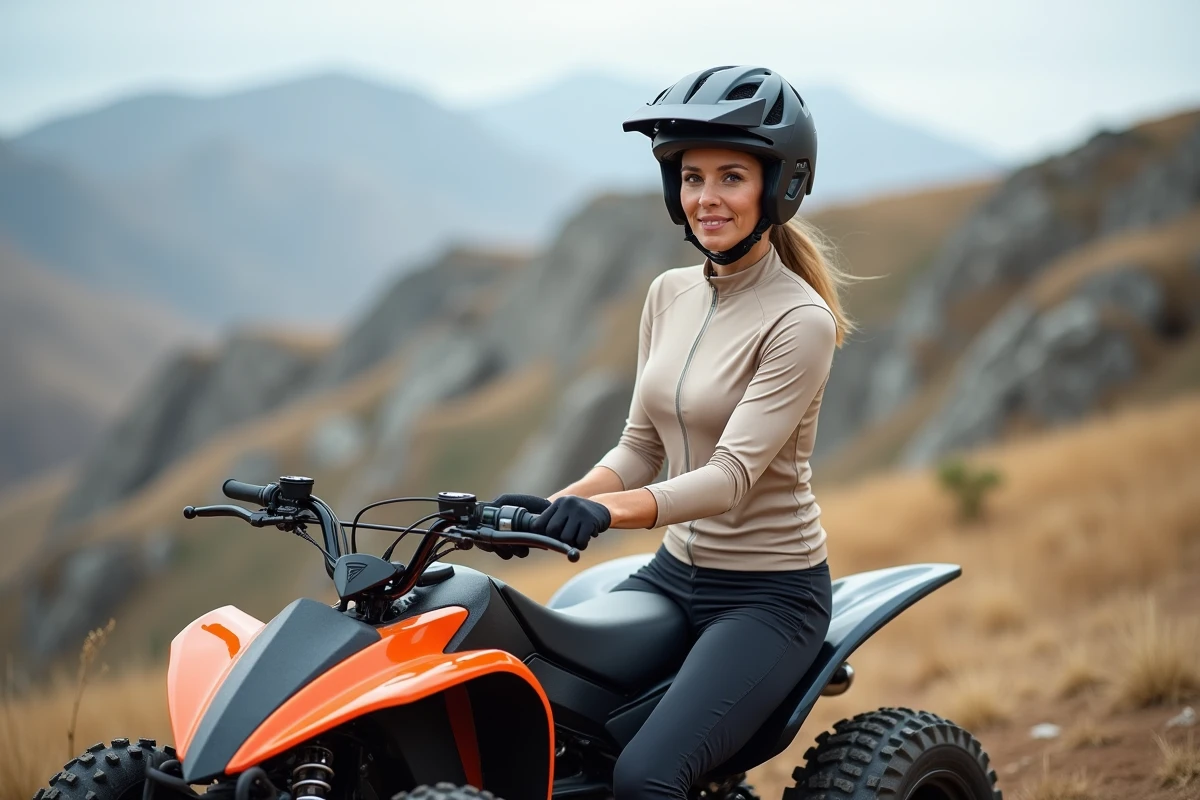
Road approval and T3b/L7e categories: the regulatory framework to know
An unapproved electric quad can legally only operate on private land. This restriction significantly limits the appeal of a purchase for an adult who wants to use it daily, whether for short trips or work on public roads.
Since 2024-2025, manufacturers like Ecoquad (French manufacturer) have been offering models approved in the T3b (agricultural or forestry vehicle) or L7e-B (heavy quadricycle) categories. These approvals allow for road use with registration and a registration certificate.
The difference between the two categories is not trivial:
- The T3b category pertains to vehicles for agricultural or forestry use, with a limited maximum speed. It allows for travel on departmental roads to reach fields, for example.
- The L7e-B category corresponds to heavy all-terrain quadricycles, with different requirements regarding engine power and safety devices (lighting, braking).
- A model sold without approval (a common case on marketplaces) can never be registered afterward, even by adding equipment. The choice must therefore be made before purchase.
On the European regulatory side, changes are underway regarding the noise thresholds allowed for all-terrain vehicles. Electric quads, being inherently quiet, have a structural advantage in this area, which could accelerate their adoption in zones where noise pollution limits the use of thermal models.
Adult electric quad: recreational, utility, or professional use
The choice of a model depends less on the raw technical specifications than on actual use. A quad intended for weekend forest rides does not have the same constraints as a machine used eight hours a day on a farm.
Recreational and off-road hiking
For recreational use, engine power and instant torque matter more than record range. A moderately powered brushless motor is more than sufficient for outings lasting a few hours. Driving comfort (suspension, ergonomics of the controls) and operational silence become the real differentiating criteria compared to a thermal quad.
Professional and utility use
It is in the professional segment that the adult electric quad is progressing the fastest. The Ecoquad E-Worker, for example, directly targets farmers and local authorities. Field feedback still varies on battery durability in extreme conditions (intense cold, mud, prolonged vibrations), but the cost of use remains significantly lower than that of a thermal quad over time.
A often overlooked point: the type of transmission. Models equipped with a shaft drive require less maintenance than a traditional chain, a concrete advantage for a professional who does not want to immobilize their vehicle.
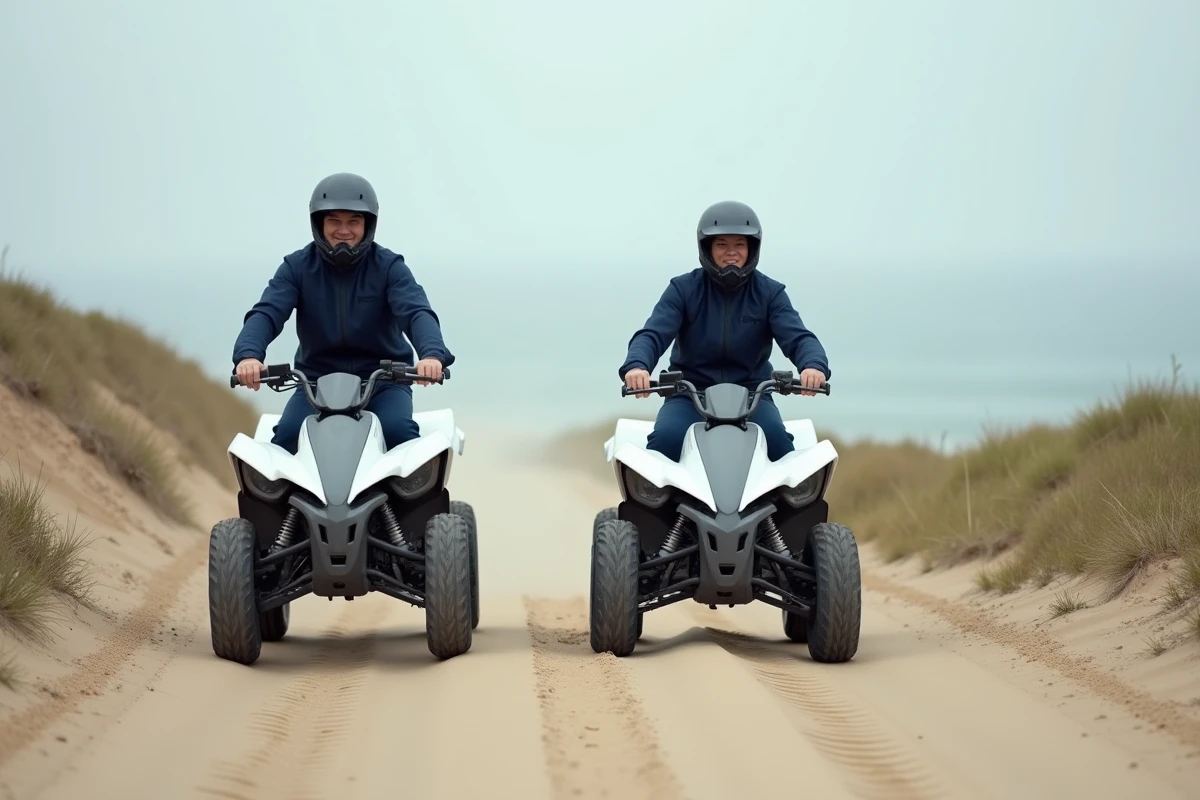
Electric quad vs thermal: the limits to keep in mind
The picture is not entirely rosy. The available data does not yet allow for conclusions about the actual longevity of batteries beyond five to seven years of intensive use. Manufacturers communicate theoretical charge cycles, but real conditions (temperature, depth of discharge, storage) significantly alter these projections.
The repair and spare parts network remains more limited than for thermal quads. In the event of an electronic failure or a BMS (battery management system) malfunction, finding a competent repairer outside major urban areas can take time.
On the other hand, routine maintenance is objectively simpler: no oil changes, no air filter replacements, no spark plugs. The annual maintenance costs are well below those of an equivalent thermal quad.
The initial purchase price remains a barrier for many buyers. Road-approved models with good capacity batteries are positioned in a significantly higher price range than their entry-level thermal counterparts. The gap narrows over time thanks to energy and maintenance savings, but the initial investment requires a medium-term vision.
The electric quad for adults is no longer a gadget or just a silent toy. The models available in 2025 cover real uses, from leisure to agricultural work. The maturity of the market now depends on the long-term reliability of the batteries and the expansion of the maintenance network, two points on which field feedback in the coming years will be crucial.