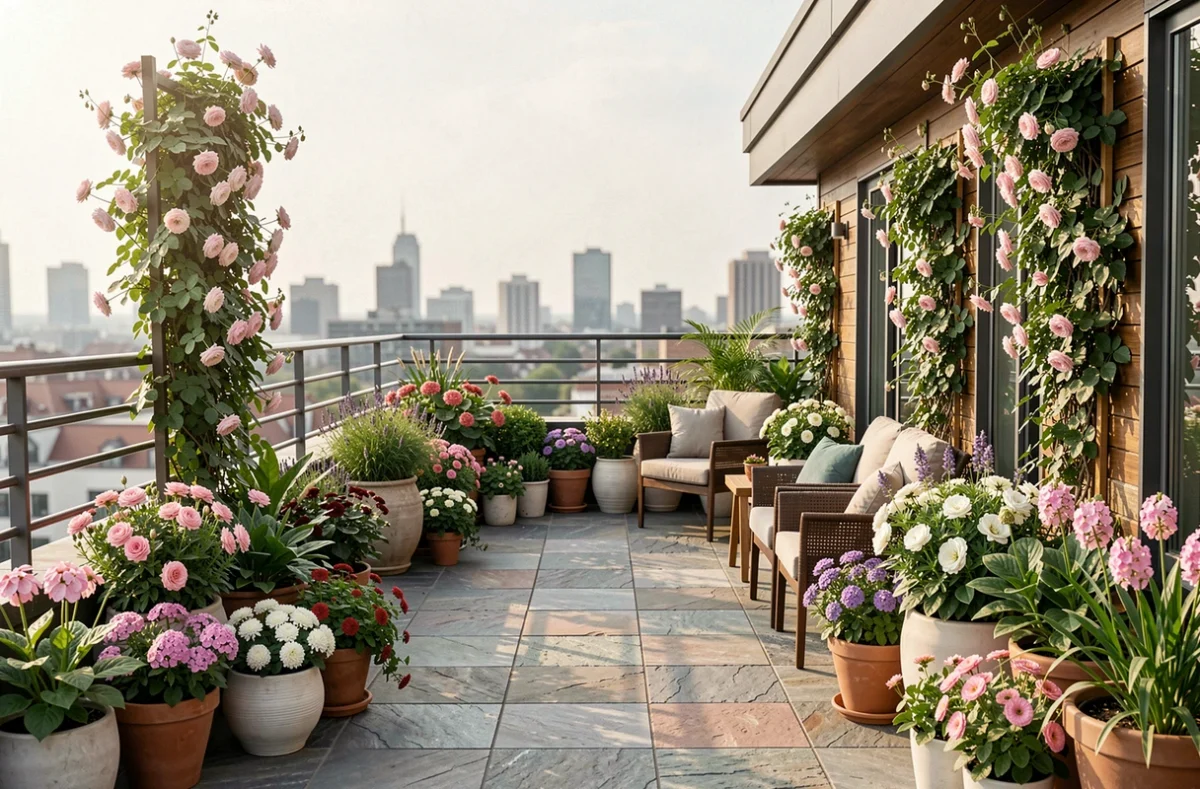
Designing a modern flower-filled terrace involves combining containers, vertical structures, and plants with complementary blooming cycles. Each option comes with different constraints: weight on the slab, exposure, maintenance, and co-ownership regulations. The ten approaches that follow cover various situations, from narrow urban balconies to large ground-level terraces.
1. Hanging Planters on Railings
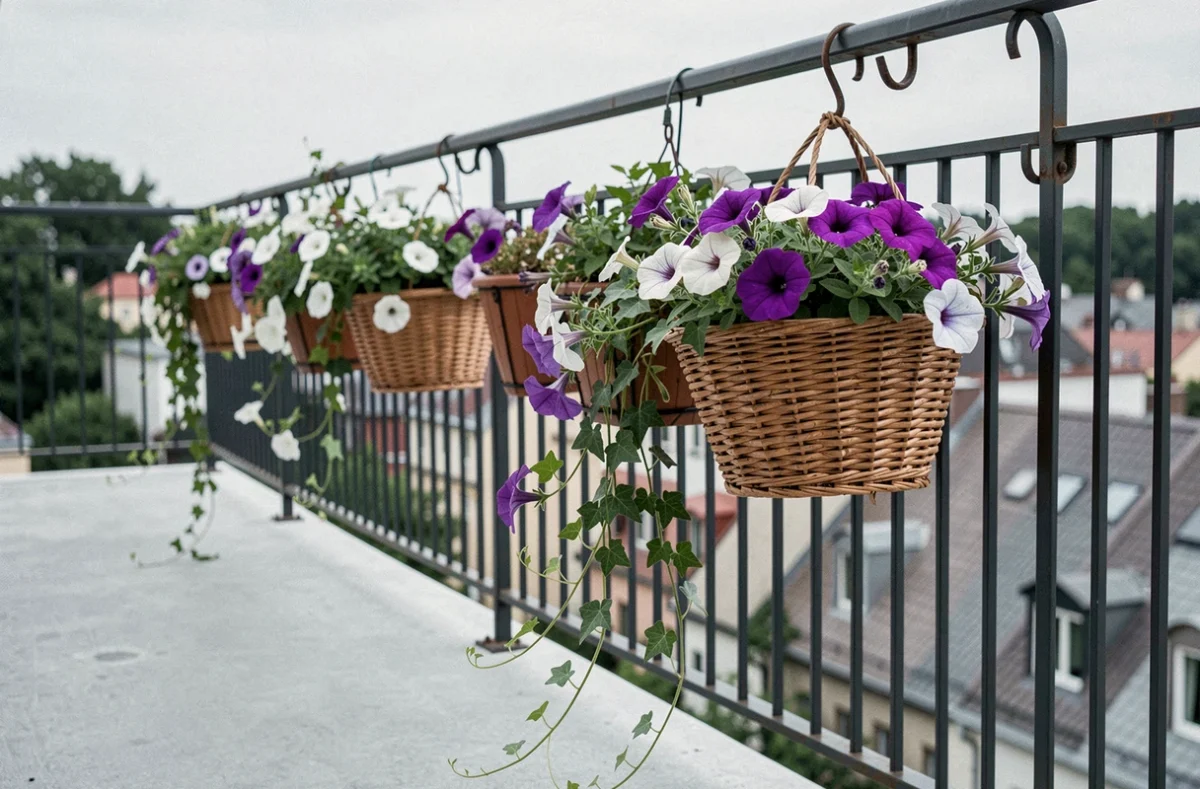
Planters attached to the guardrail free up floor space and create a floral line at eye level. The choice of material (galvanized steel, fiber, terracotta) alters the total weight once the substrate is wet, a factor not to be underestimated on an upper-floor balcony.
The planters must be secured on the inner side of the guardrail to prevent any risk of falling. In co-ownership, regulations may also impose constraints on the external appearance visible from the street. Checking these two points before purchase avoids disappointments.
If you are looking for more ideas for a modern flower-filled terrace, combinations of perennial geraniums and small grasses work well in this narrow format.
2. Green Wall with Climbing Plants
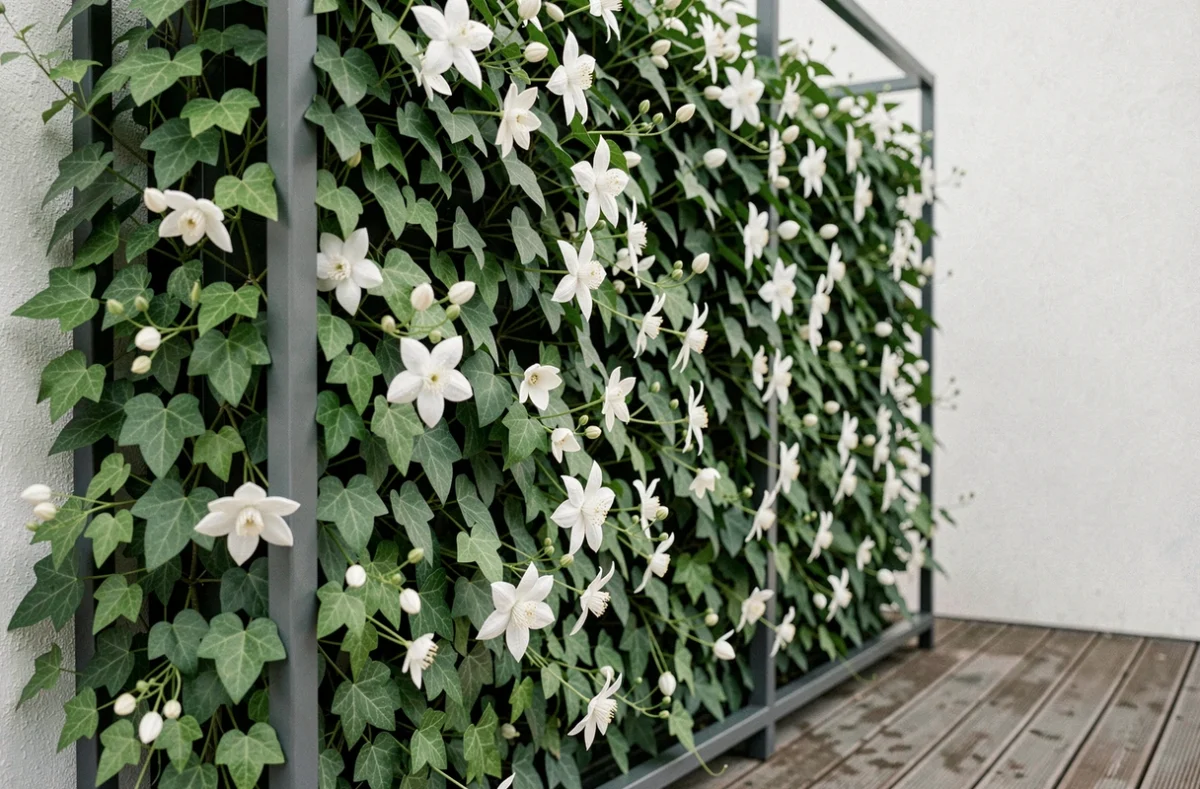
A green wall utilizes verticality without encroaching on circulation space. Wisteria, star jasmine, or honeysuckle climb on a support fixed to the wall and dress a dull facade in just a few seasons. The result is dense, fragrant, and partially filters the view.
The support must be separated from the load-bearing wall to maintain waterproofing. On a rooftop terrace, checking the load-bearing structure and waterproofing is necessary before fixing heavy elements or placing containers at the foot of the wall.
3. Colorful Flower Beds in Pots
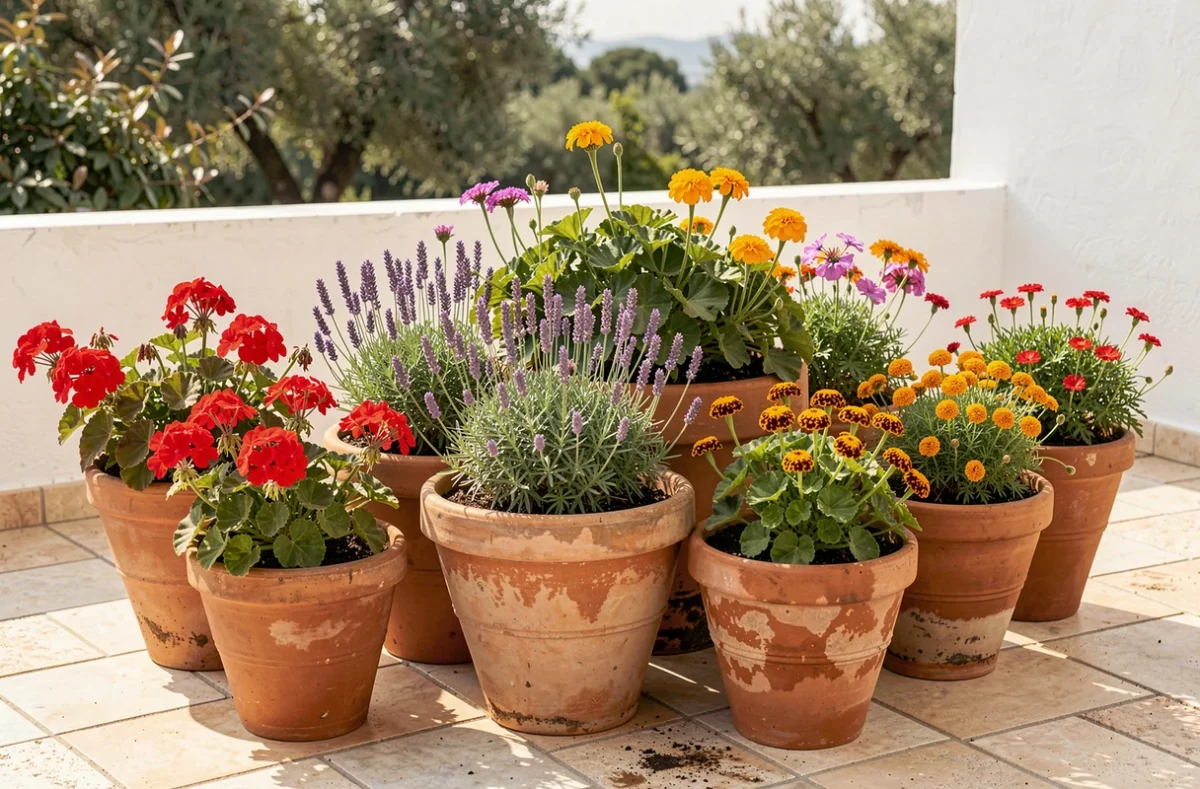
Grouping several colorful flower pots replicates the effect of a garden bed, even on a paved surface. Petunias, pansies, and primroses offer wide seasonal palettes. The principle is to concentrate the pots in one area rather than scattering them across the entire terrace.
A pot bed can be reorganized each season. Autumn colors (heathers, chrysanthemums) replace summer blooms without altering the structure. This flexibility compensates for the more frequent watering compared to in-ground planting.
4. Pergola Dressed with Vegetation
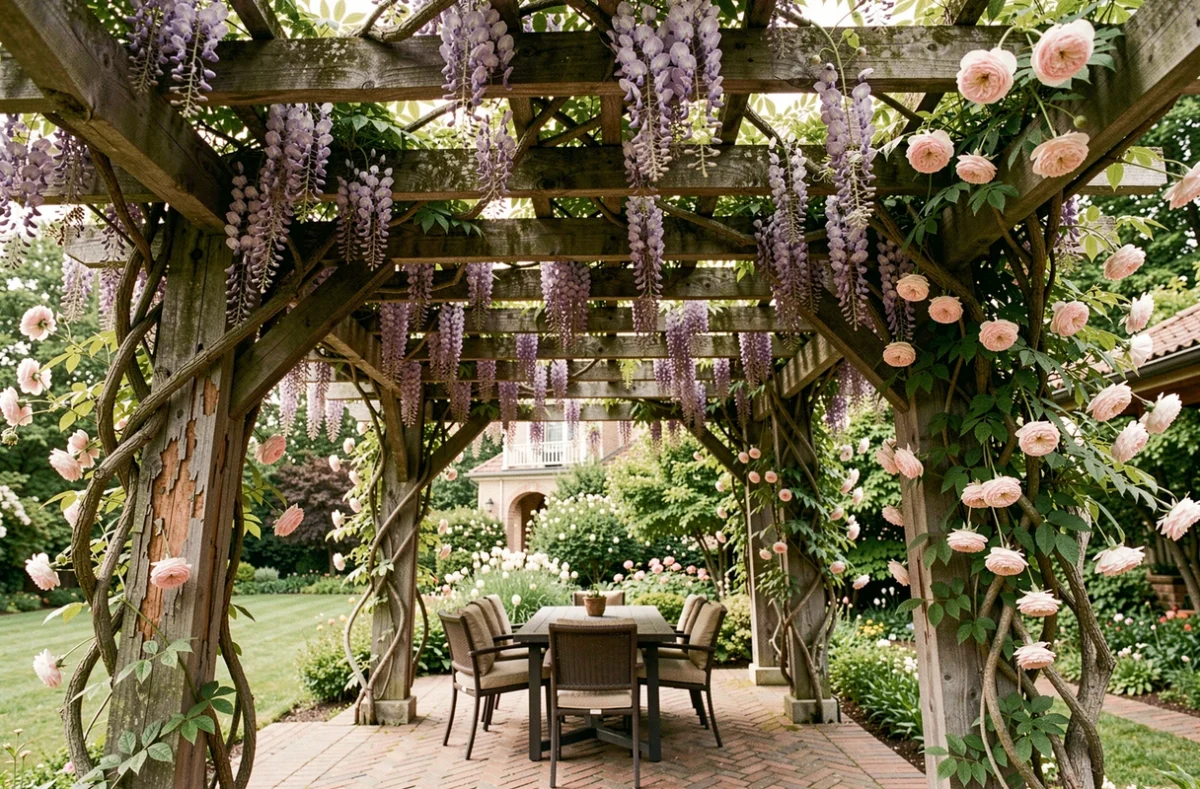
A vegetated pergola creates a naturally shaded area. Wisteria is the classic choice, but golden hop or bignonia provide different textures and shades. The foliage filters light in summer and allows sunlight in winter, provided a deciduous species is chosen.
The weight of a mature climber on a pergola can be considerable. The structure must be sized accordingly, especially if it is freestanding and not fixed to the facade. A lightweight wooden trellis is insufficient for an adult wisteria.
5. Trellis with Flowering Plants
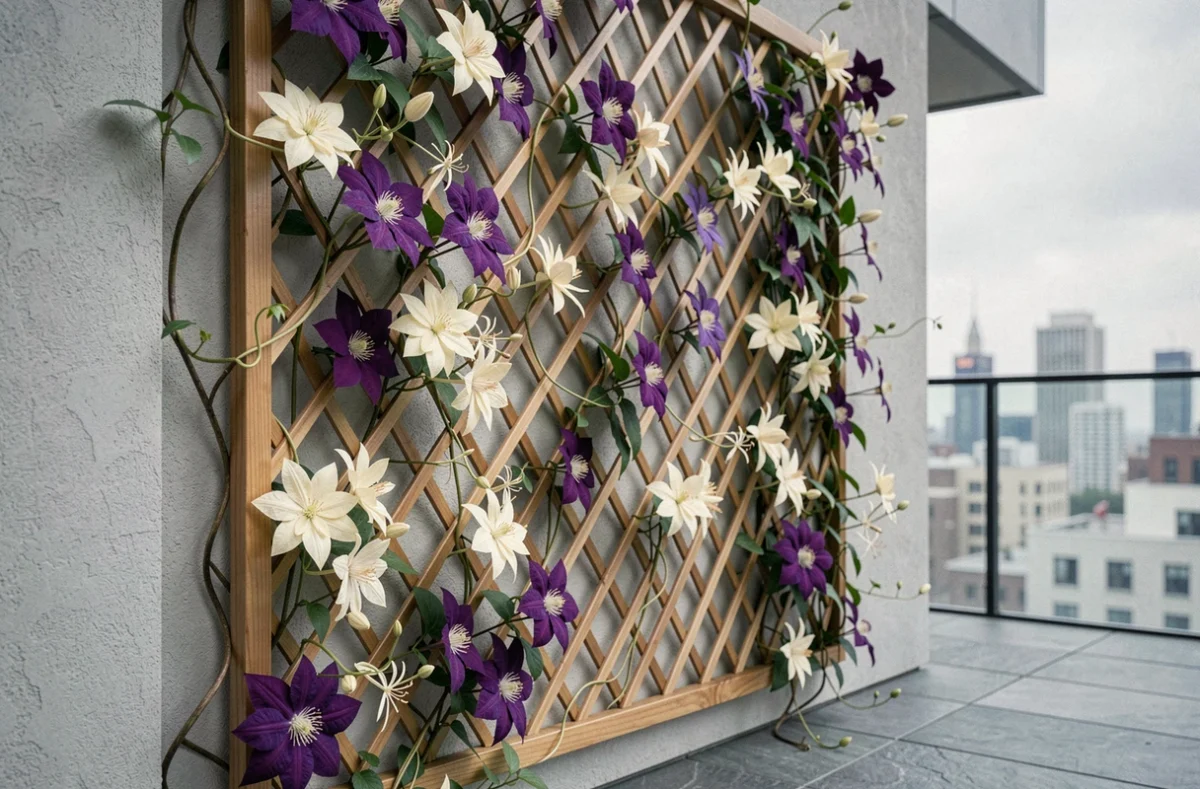
The trellis is a lighter and more modular version of the green wall. Fixed against a wall or freestanding, it serves as a support for clematis, climbing roses, or nasturtiums. Its flat format is suitable for narrow terraces where every centimeter counts.
A treated wooden or powder-coated metal trellis withstands the elements better than a bamboo model, which degrades in just a few seasons. The spacing of the mesh determines the type of plant: a fine mesh guides the tendrils of clematis, while a wide mesh suits the rigid stems of a rose.
6. Large Planters
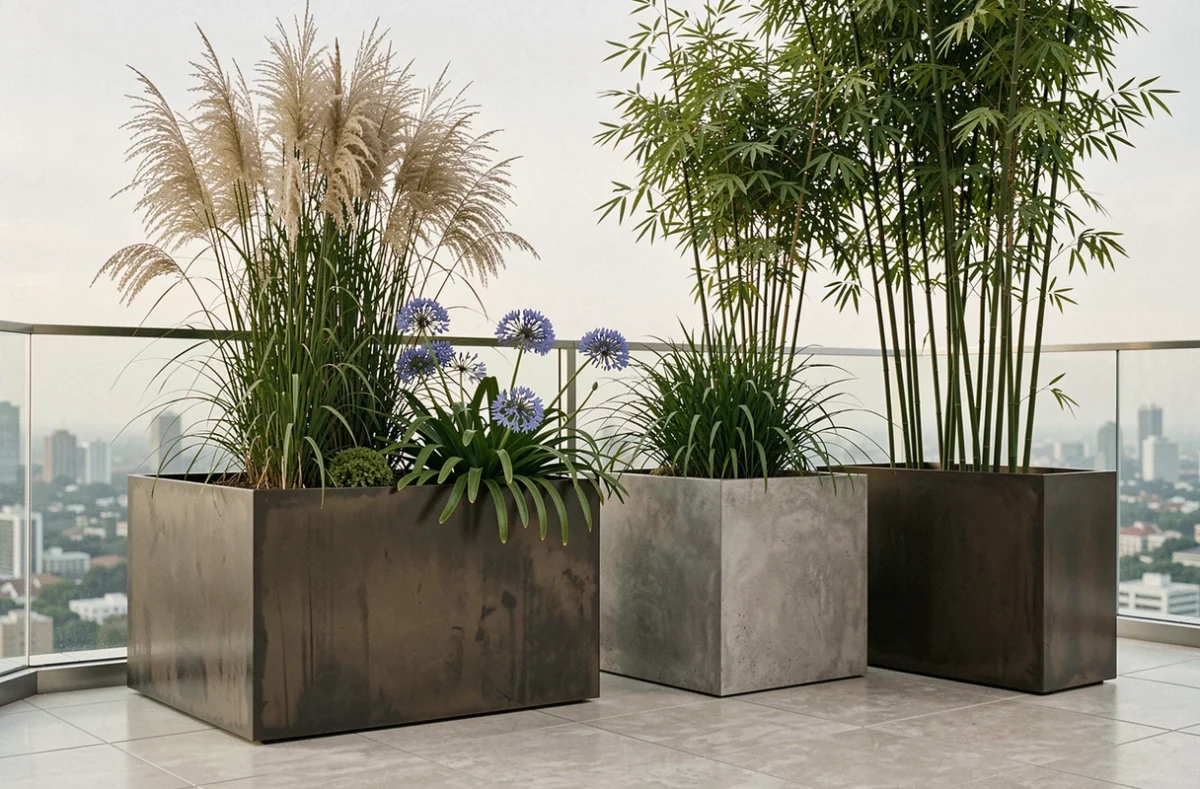
The weight calculation of a planter must include the wet substrate, retained water, and the plant. A large planter filled with moist potting soil weighs significantly more than one might imagine. On a balcony or rooftop terrace, this information determines what is feasible.
Large planters allow for the planting of shrubs (oleander, olive, Japanese maple) that structure the space like a tree would in a garden. A single well-placed planter creates a focal point that is clearer than a dozen small pots scattered around.
7. Frost-Resistant Flowering Plants
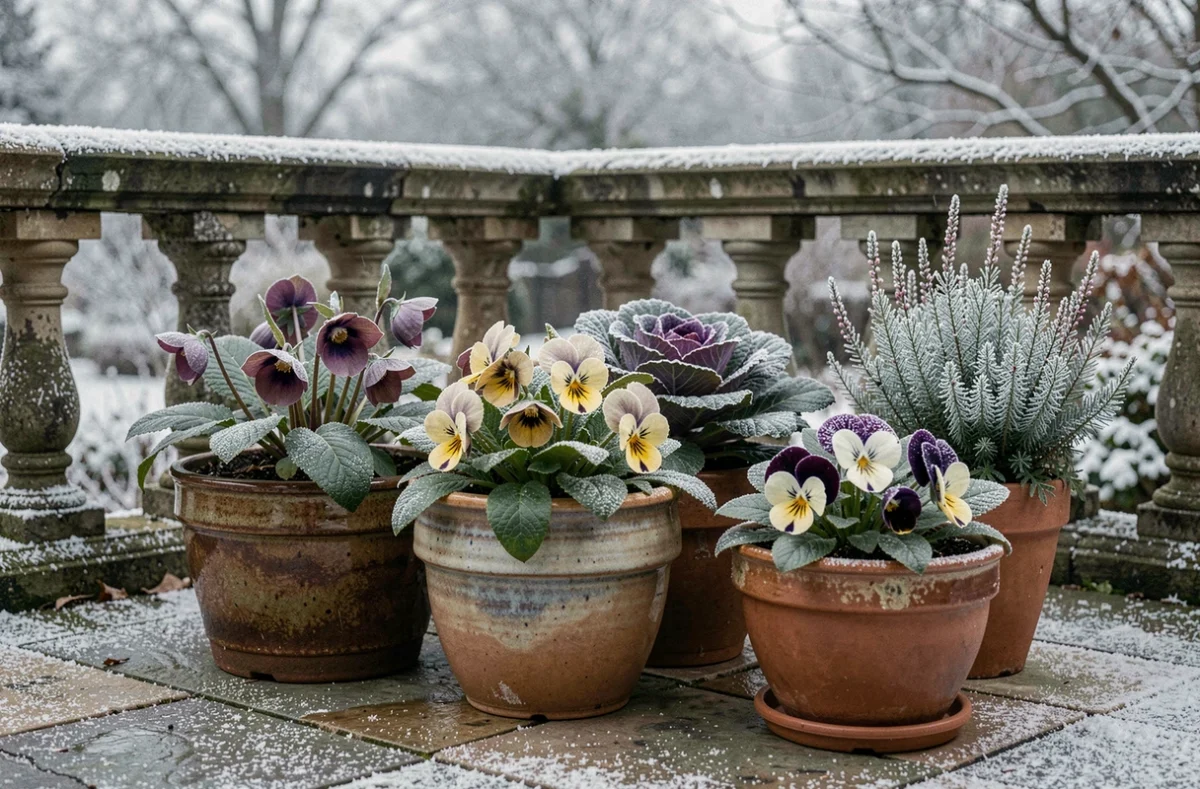
Focusing on hardy species ensures a flower-filled terrace even during the cold months. Hellebores, winter heather, and pansies withstand negative temperatures and bloom between December and March, when most plants are dormant.
Staggering blooms season by season allows for year-round coverage. Here is an example of seasonal succession suitable for terrace pots:
- Winter: black hellebore, winter heather (erica carnea), pansy
- Spring: garden primrose, perennial geranium
- Summer: lavender, common vervain, petunia
- Autumn: chrysanthemum, aster, common heather
8. Arrangement of Pots of Different Sizes
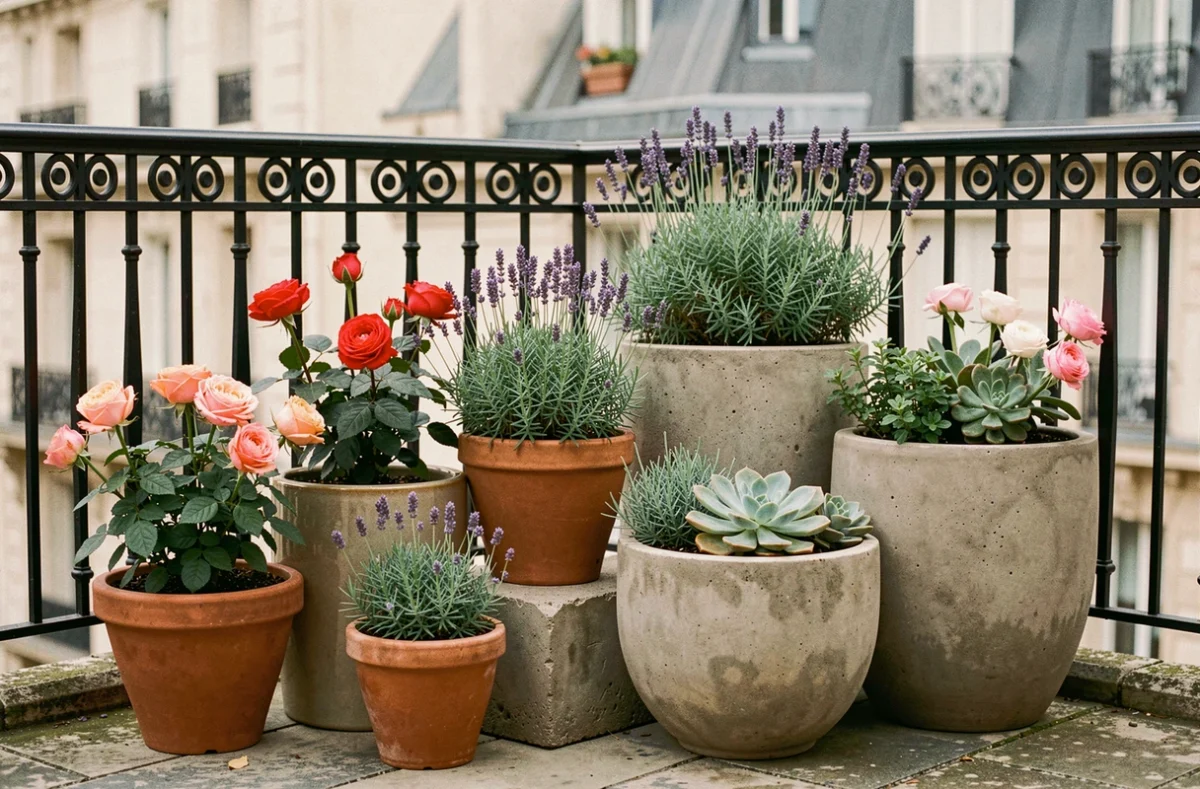
Varying the heights and diameters of pots creates relief on a flat surface. The principle is to place the largest pots in the background or at an angle, then gradually decrease to the smallest in the foreground.
A trio of pots (large, medium, small) in the same material is enough to structure a corner of the terrace. Multiplying materials and styles produces the opposite effect: a cluttered impression. The consistency of the containers is as important as the choice of plants.
9. Year-Round Green Terrace
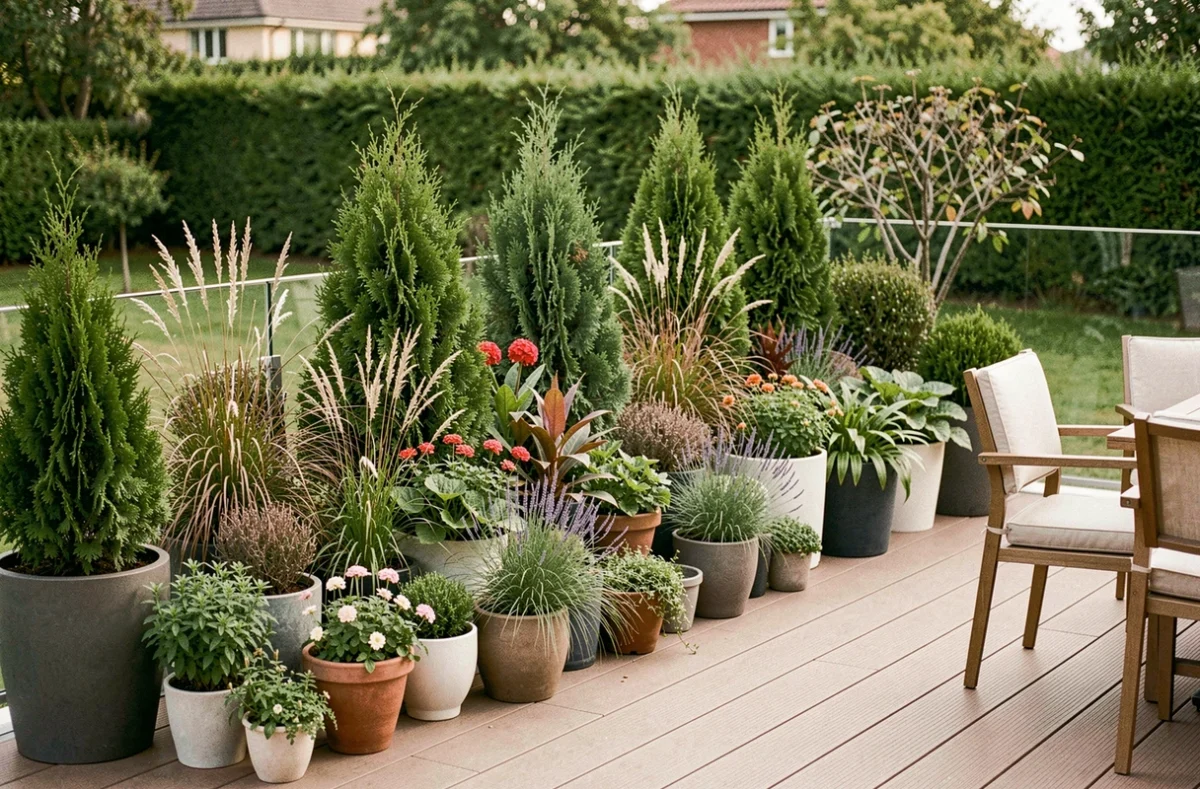
A green terrace twelve months a year relies on a mix of evergreens (boxwood, laurel, grasses) and staggered blooms. The evergreens form the framework, while the flowers provide temporary color.
Watering potted plants may be subject to local restrictions depending on the drought alert level. Measures vary by municipality and may limit hours or prohibit watering container plants. Consulting VigiEau before designing a water-intensive layout allows for adjusting the choice of species in advance.
10. Modern and Elegant Floral Arrangement
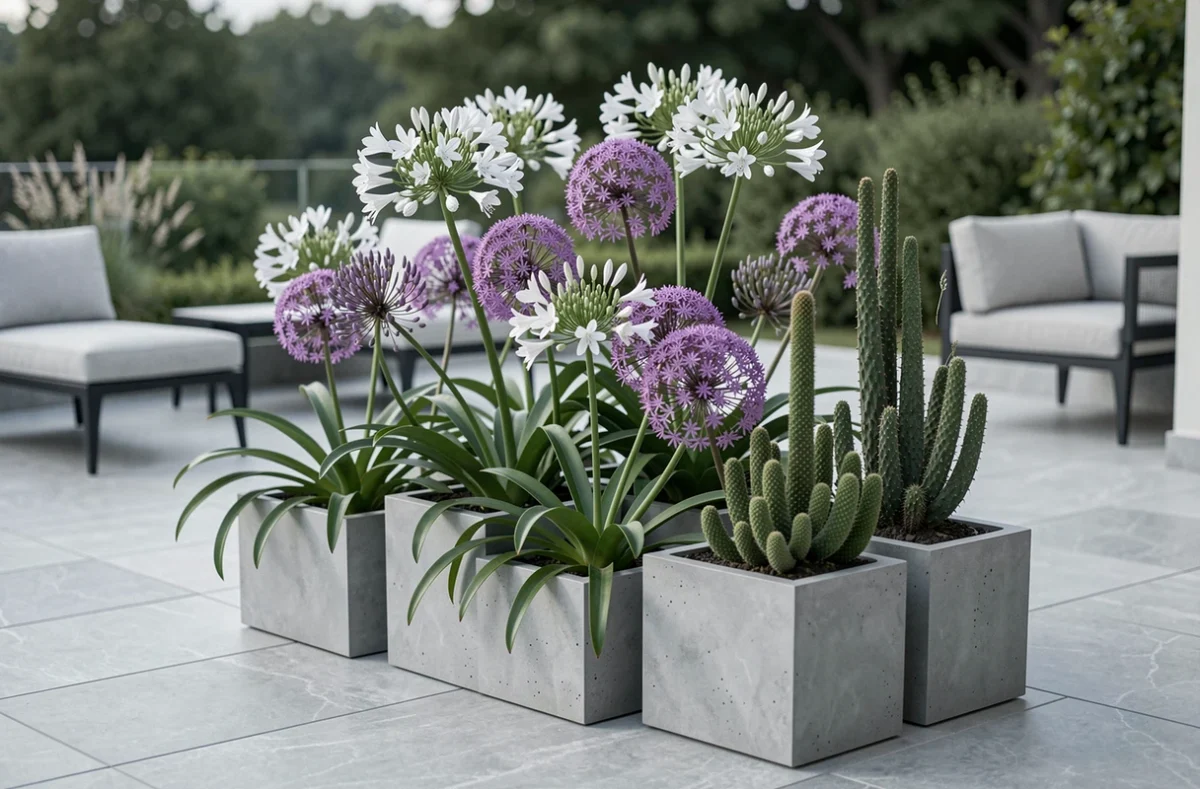
The modern terrace style is based on a limited vocabulary: a restricted color palette (two to three shades), containers with clean lines, and graphic plants. Grasses (miscanthus, stipa) add movement without visually overwhelming the space.
Combining a unique bloom (lavender, agapanthus) with structured evergreen foliage (trimmed boxwood, pittosporum) creates a clean and contemporary effect. Elegance comes from restraint: fewer varieties, better arranged.
The choice between these ten approaches primarily depends on the physical constraints of the terrace (acceptable weight, exposure, surface area) and the time available for maintenance. A sustainable flower-filled terrace starts with checking these parameters, not by choosing colors.