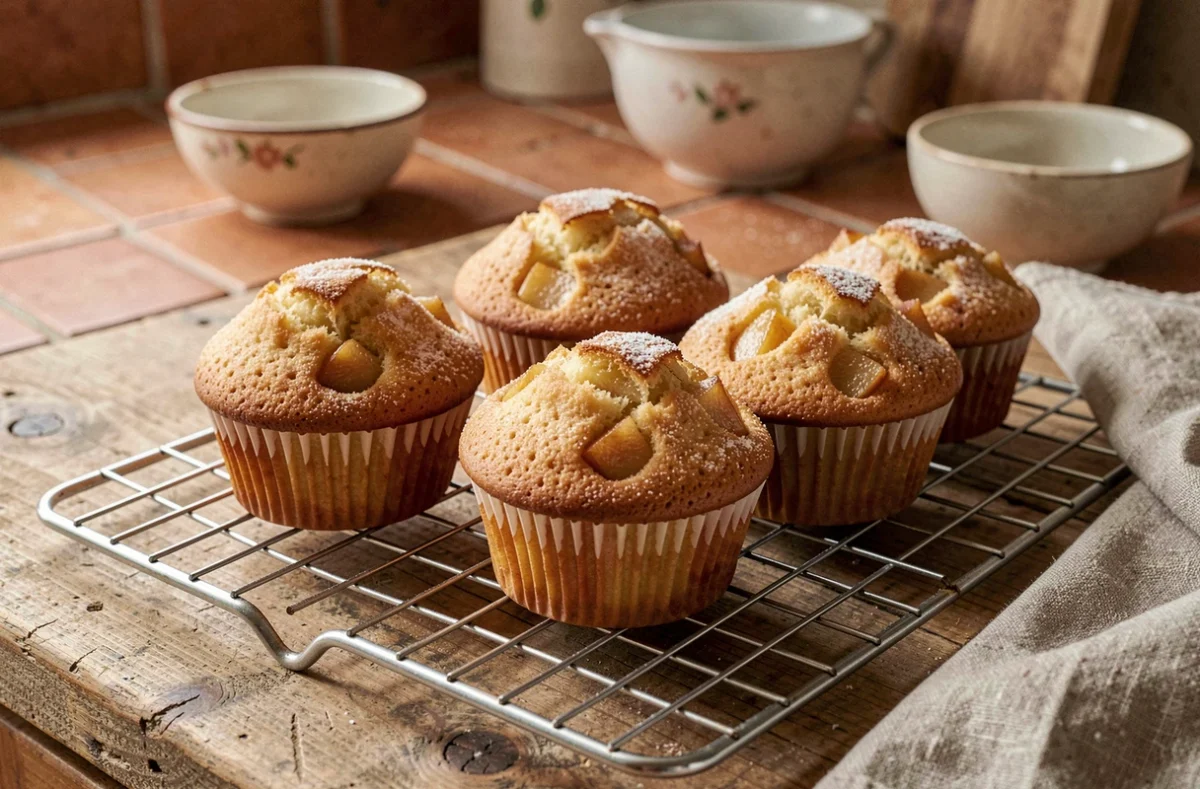
Several blogs and fan groups attribute an apple muffin recipe to Cyril Lignac, but no official source from the chef confirms this exact title. The show Tous en cuisine did indeed feature muffins, with variations including pecans and maple syrup. The recipe circulating online is therefore more of a free inspiration than a signed publication.
This article analyzes the parameters that make the difference between a dense muffin and an airy muffin, starting from the ingredients, the mixing technique, and the baking process.
Comparison of apple varieties for fluffy muffins
The choice of apple significantly alters the final texture of the muffin much more than the sugar content. Not all varieties react the same way to the heat of the oven: some melt and release juice, while others maintain their structure and add crunch.
| Variety | Baking Stability | Texture in Mouth | Natural Sugar Content |
|---|---|---|---|
| Granny Smith | Good | Firm, tart pieces | Low |
| Golden | Medium | Melting, sweet | High |
| Reine des Reinettes | Good | Slightly crunchy, fragrant | Moderate |
| Boskoop | Very good | Firm, tart | Low |
| Gala | Poor | Very melting, sweet | High |
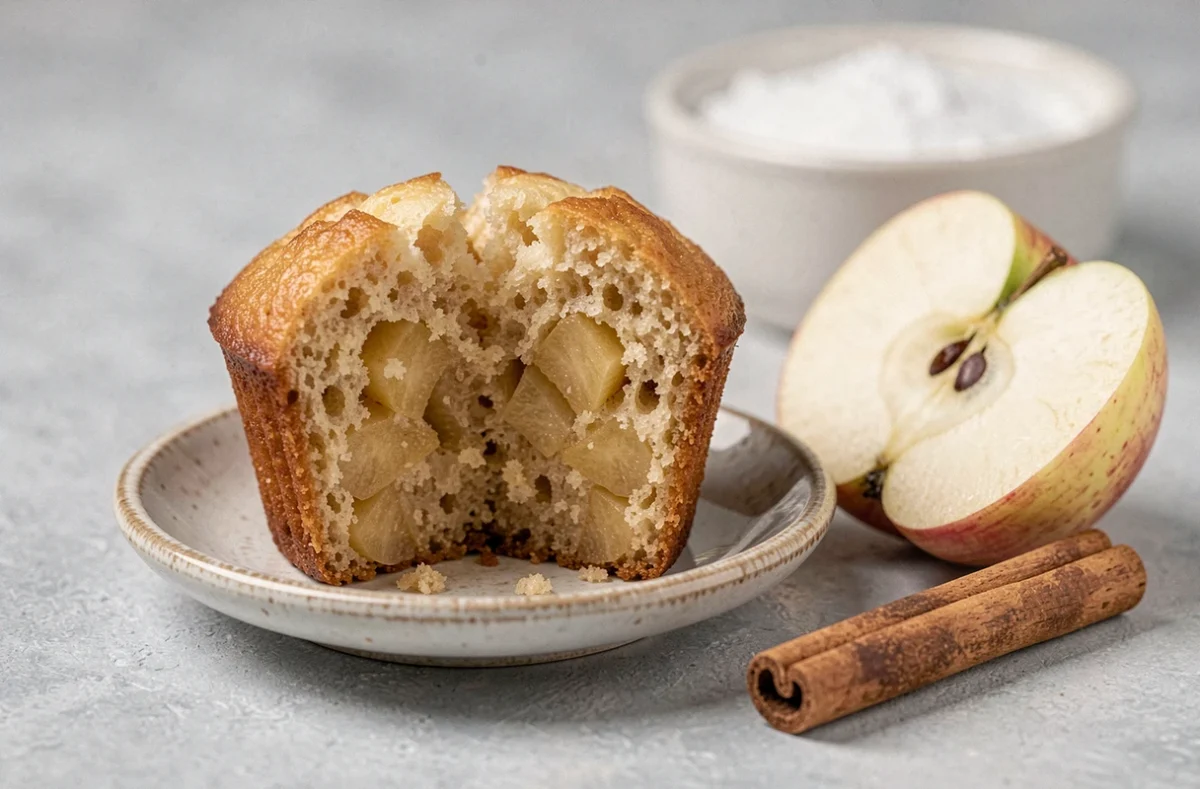
An apple that melts too much (like Gala, for example) releases water into the batter and produces a moist muffin in the center. A variety with good stability like Boskoop or Granny Smith retains identifiable pieces after baking, which adds contrast to the crumb.
To recreate the version that reminds Cyril Lignac’s apple muffins, the Reine des Reinettes offers an interesting balance of flavor, sweetness, and stability. It does not require the addition of lemon juice to compensate for acidity, unlike the Golden.
Mixing the muffin batter: the technical gesture that changes everything
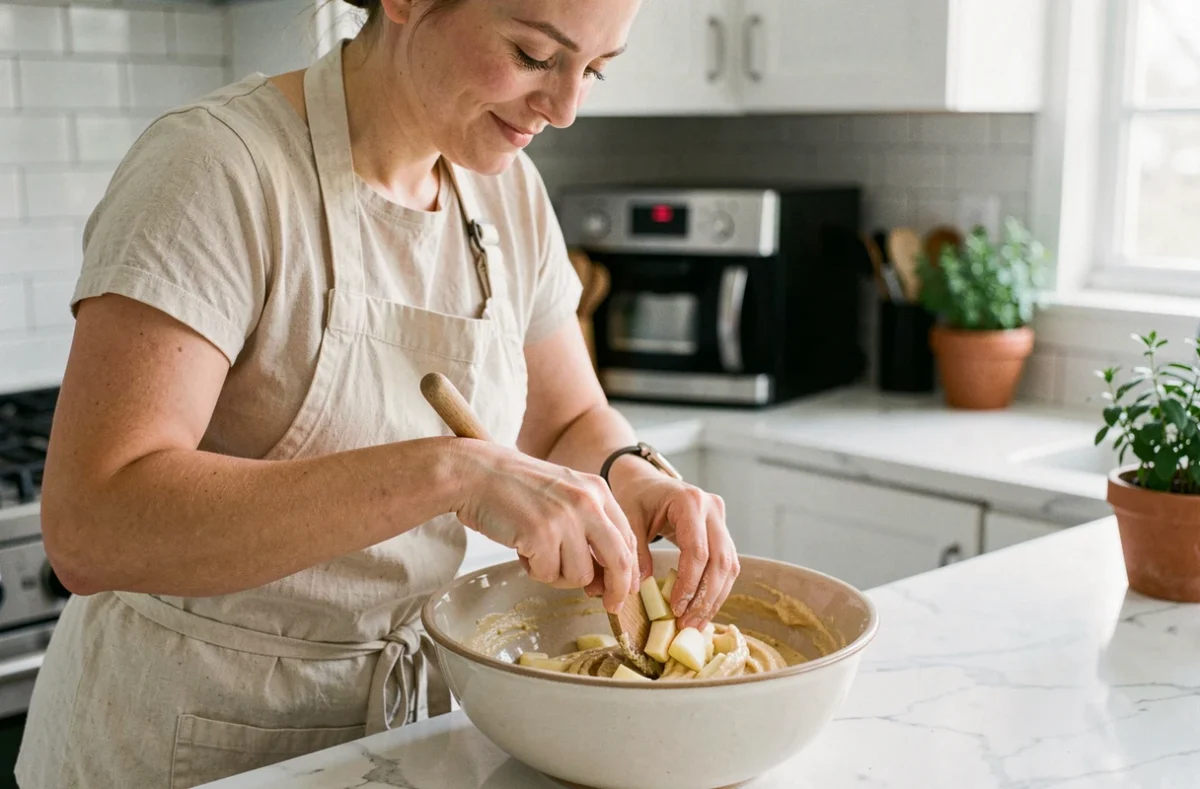
Most apple muffin recipes focus on the list of ingredients and neglect the mixing technique. Yet, this is the factor that separates a fluffy result from a compact and elastic one.
Why excessive mixing produces a rubbery muffin
Wheat flour contains gluten. The more you work the batter, the more the gluten network develops, and the denser the crumb becomes. A muffin is not bread: you should mix just enough to make the flour disappear, without aiming for a smooth batter.
In practical terms, this means about fifteen spatula movements, no more. Lumps should remain visible in the batter, and that’s normal. This intentional under-mixing ensures an airy crumb with large irregular holes, the hallmark of a successful muffin.
Order of ingredient incorporation
The so-called “muffin method” relies on two separate bowls:
- One bowl for dry ingredients: flour, baking powder, cinnamon, salt, granulated sugar
- One bowl for liquid ingredients: beaten eggs, milk, warm melted butter (not hot, to avoid cooking the egg)
- The diced apple is added last, coated with a spoonful of flour taken from the dry bowl, which prevents them from sinking to the bottom of the mold
Pour the liquids over the dry ingredients all at once and then mix briefly. Add the floured apples and give three or four turns with the spatula. The batter is ready.
Baking apple muffins: temperature and duration
A poorly set oven negates the preparation work. Two mistakes are consistently made: a temperature that is too low, causing the muffin to spread, and an excessively long baking time that dries out the crumb.
A preheated oven at a high temperature for the first few minutes causes the batter to rise quickly. This thermal shock creates the characteristic domed top. Afterward, you can slightly lower the temperature to finish baking without excessively coloring the top.
The toothpick test remains the most reliable indicator: inserted into the center of the muffin, it should come out with a few moist crumbs, not raw batter or a perfectly clean toothpick (a sign of overcooking). Removing the muffins from the mold after a few minutes of resting on a rack prevents condensation that softens the base.
Cinnamon and spice variations in apple muffins
Cinnamon is the default spice in all apple muffin recipes. Its pairing with apple works well, but it can easily overshadow other flavors if used excessively.
A moderate amount of cinnamon allows the apple to remain in the foreground. Beyond a level teaspoon for a dozen muffins, the spice takes over.
- Grated nutmeg (a pinch) adds a warm note without competing with the apple
- Ground ginger brings a subtle spiciness, interesting with tart varieties like Granny Smith
- Ground cardamom, less common, gives a floral aroma that pairs well with Golden
- Vanilla (liquid extract rather than industrial vanilla sugar) enhances the perception of sweetness without adding sugar
Adapting the spice to the chosen apple variety yields a more coherent result than applying the same mix to all versions. A tart Boskoop handles ginger better, while a Reine des Reinettes is sufficient with just vanilla and a hint of cinnamon.
The recipe inspired by Cyril Lignac that circulates online does not always specify this level of detail. The choice of apple, the mixing technique, and the oven setting weigh more heavily on the final result than the brand of flour or the type of mold used. A successful apple muffin relies on these three technical parameters, not on a list of premium ingredients.