Every change of season raises the same question: which pieces truly deserve a place in your wardrobe? This season’s fashion trends are characterized by a dual movement, between bold silhouettes and a demand for sustainability. Understanding what is at play behind a trendy garment also means knowing how it is purchased, how long it is worn, and what happens to it afterward.
Repairability and wear duration: the real criteria for a trendy piece
Have you ever noticed that a blazer worn for two seasons often ends up losing its lining or buttons? The current trend is not just about a cut or a color. It includes the garment’s ability to be repaired and to last over time.
French regulations now push brands to consider longevity from the design stage. A piece designed to be repaired is worth more than a piece simply on sale. In practical terms, this means checking the quality of the seams, the availability of replacement buttons or fasteners, and the fabric composition.
Before adopting a trend, ask yourself a simple question: how many times will you wear this piece? A straight-leg cotton jean or a structured coat can last through several seasons. An ultra-seasonal top, even on sale, is likely to end up at the back of the closet after a few weeks. The actual duration of wear distinguishes a smart purchase from an impulsive one.
It is by keeping this perspective in mind that one can then browse fashion trends on Conseils Beauté with a sharper eye on what truly deserves the investment.
Purchase channel and return footprint: what style guides overlook
Most articles on trends list pieces without ever addressing how you buy them. The purchase channel changes everything, including the environmental impact of your wardrobe.
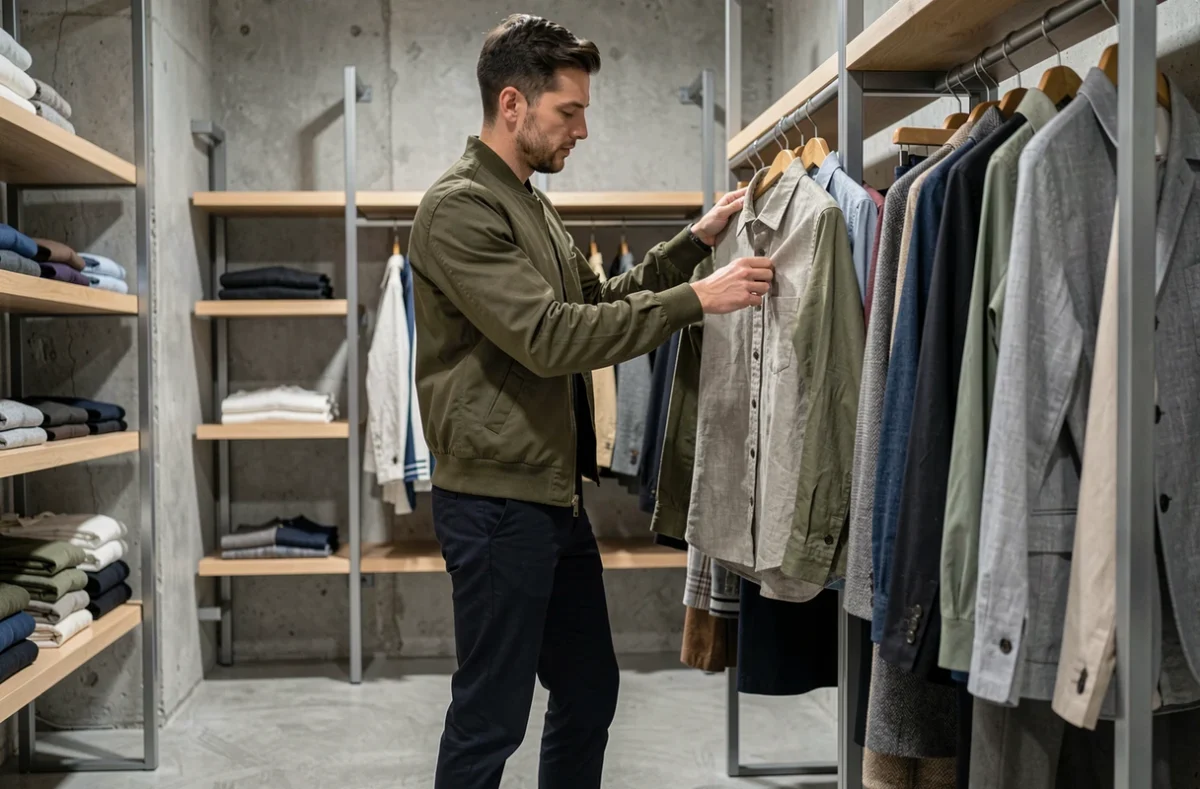
An impact analysis conducted for Oxfam France by RDC Environment, reported in September 2026, reveals a counterintuitive point. Buying second-hand online can generate more emissions than buying in a charity shop, due to individual shipments and travel related to packages. The omnichannel shopping journey (trying on in-store, ordering online, returning to a pickup point) further blurs the lines.
Some concrete reflexes can help limit this footprint:
- Prefer trying on in-store for structured pieces (blazer, coat, trousers) to reduce returns, which multiply trips and packaging.
- For second-hand, favor local or grouped circuits (charity shops, neighborhood clothing exchanges) rather than resale platforms with individual shipping.
- Check return policies before buying: some retailers offer free returns in-store, which avoids an extra package.
The recommendation to “buy second-hand” remains relevant, but it benefits from being complemented by “choose the right channel.” A trendy garment bought locally, whether new or second-hand, often has a lighter footprint than a package ordered from afar and then returned.
Trendy colors and silhouettes for the autumn-winter season
Let’s move on to concrete choices. This season, deep colors dominate: burgundy, chocolate, khaki. These shades function as modern neutrals. They combine easily with each other and with basics like ecru or pearl gray.
Burgundy stands out as the key color of the season. It can be found on long coats, thick knits, and leather accessories. Its advantage: it adds visual richness without requiring complex combinations.
In terms of silhouettes, three axes emerge:
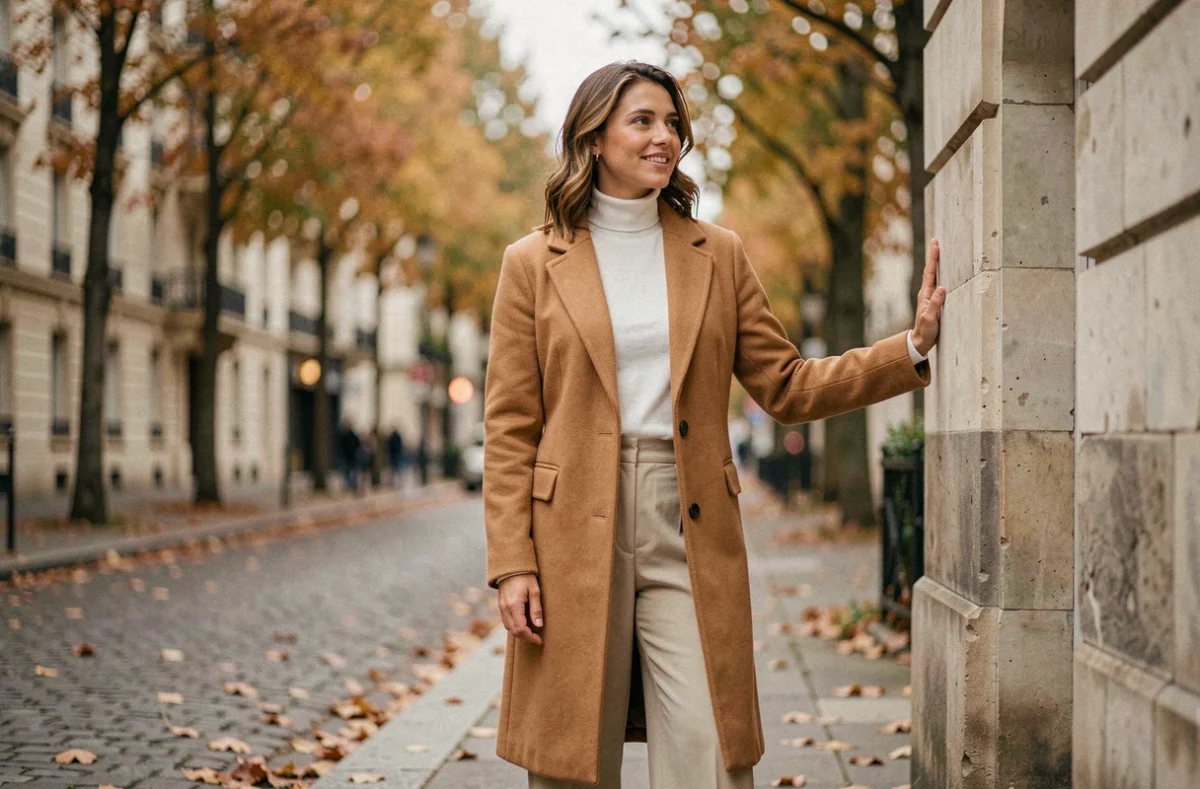
- The oversized blazer, worn both over straight jeans and a midi dress. Choose one with slightly structured shoulders to avoid the “borrowed” effect.
- The high-waisted fluid trousers, which are gradually replacing slim fits in wardrobes. In blended wool or crepe, they drape better and can be worn from the office to the weekend.
- Generous knits: thick turtleneck sweaters, long cardigans, boucle cardigans. Textured knit replaces the logo as a style marker.
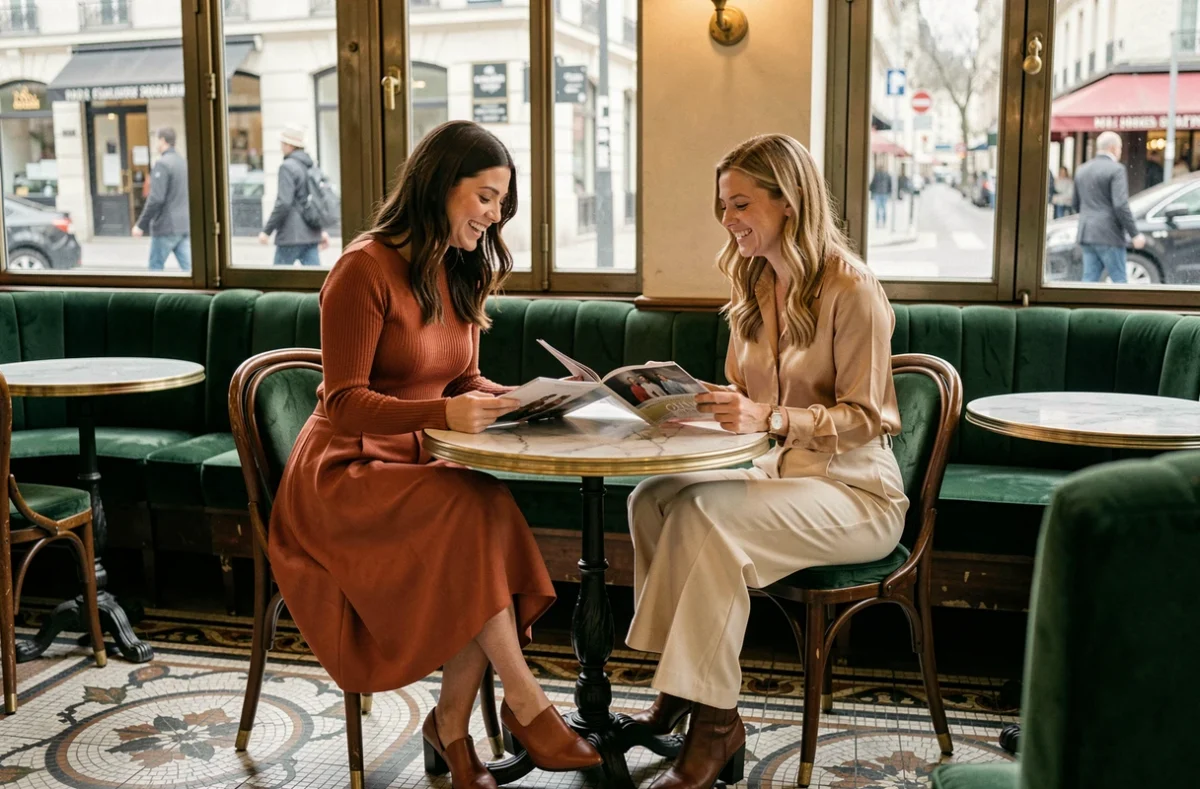
These pieces share a common point: they are not tied to a fleeting micro-trend. A well-cut blazer or a dense knit sweater can be worn for several autumns and winters without looking dated.
Building a trendy and sustainable wardrobe: a concrete method
Putting together a current look does not require a complete overhaul. The idea is to build a foundation of versatile pieces, then add one or two more distinctive elements.
The foundation consists of basics with a long wear duration: a high-quality straight jean, a structured coat in a sufficiently dense material, a natural knit sweater. Three solid pieces cover the majority of everyday situations.
The trendy element comes next. This season, it could be an oversized burgundy scarf, a textured leather bag, or fluid trousers in a chocolate color. This addition refreshes the silhouette without overhauling the entire wardrobe.
Before each purchase, apply a simple filter. Is the piece repairable? Does the purchase channel limit returns? Will you wear it at least thirty times? If the answer is yes to all three points, the purchase makes sense, whether it is a new item or second-hand.
A personal style is built through subtraction, not accumulation. The trends of this season favor precisely this approach: clean cuts, deep colors, materials that age well. The trendiest garment remains the one you will still wear next year.