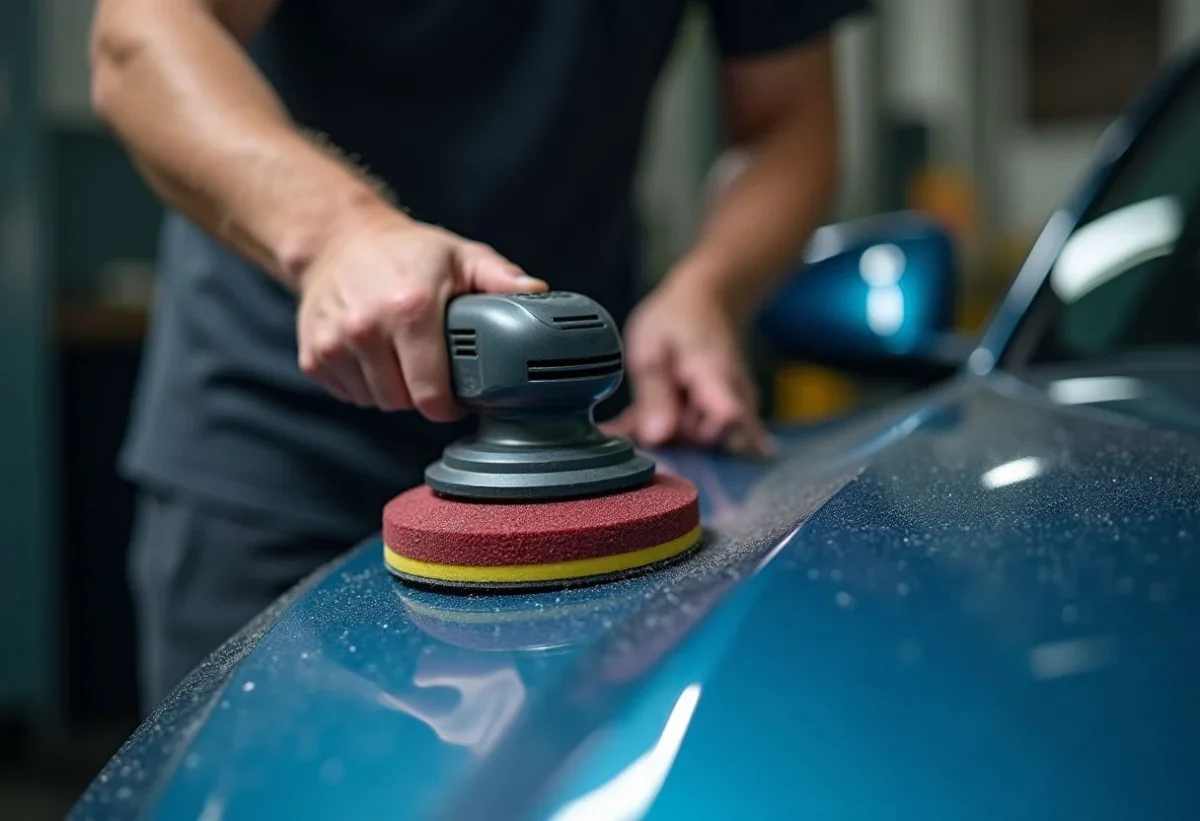
The world of surface finishing is vast and varied, a universe where every detail matters and where perfection is often the sought-after standard. Whether it’s to revive the shine of a car body, restore a tarnished metal surface, or perfect a wooden piece of furniture, the polishing disc proves to be the essential ally of this delicate art. With its ability to transform a rough surface into a smooth and shiny one, this tool plays a key role in numerous industries. Its effectiveness relies on its capacity to eliminate imperfections while preserving the original material, making it a valuable instrument for polishing professionals.
Origins and evolution of the polishing disc
The history of the polishing disc is rich in innovations and transformations. Since its humble beginnings, it has evolved to meet the growing needs of industries.
- Early polishing tools: in ancient times, artisans used natural materials such as sand and fabrics to achieve a smooth finish. These methods were certainly rudimentary, but they laid the groundwork for modern techniques.
- Technological evolution: with the industrial era, the demands for finishing spurred innovation. The development of synthetic materials and new processes enabled the creation of more efficient and durable discs.
- Modern applications: today, polishing discs are used in many industries, from automotive to aerospace, as well as in jewelry and furniture. Their ability to adapt to different materials and surfaces makes them a versatile and essential tool.
Materials used in the manufacture of polishing discs
The materials used to make polishing discs play a crucial role in their effectiveness. They determine not only the polishing capacity but also the durability of the tool.
Among the most common materials are abrasives such as alumina and silicon carbide, which are renowned for their hardness. These materials allow for the removal of deep scratches and prepare the surface for a smooth finish. The use of felt and foam offers a softer alternative, ideal for delicate finishes. These materials, which perfectly conform to the contours of surfaces, are often used for polishing tasks that require great precision. Finally, the choice of material must also consider compatibility with the type of surface to be polished, whether it be metal, wood, or plastic.
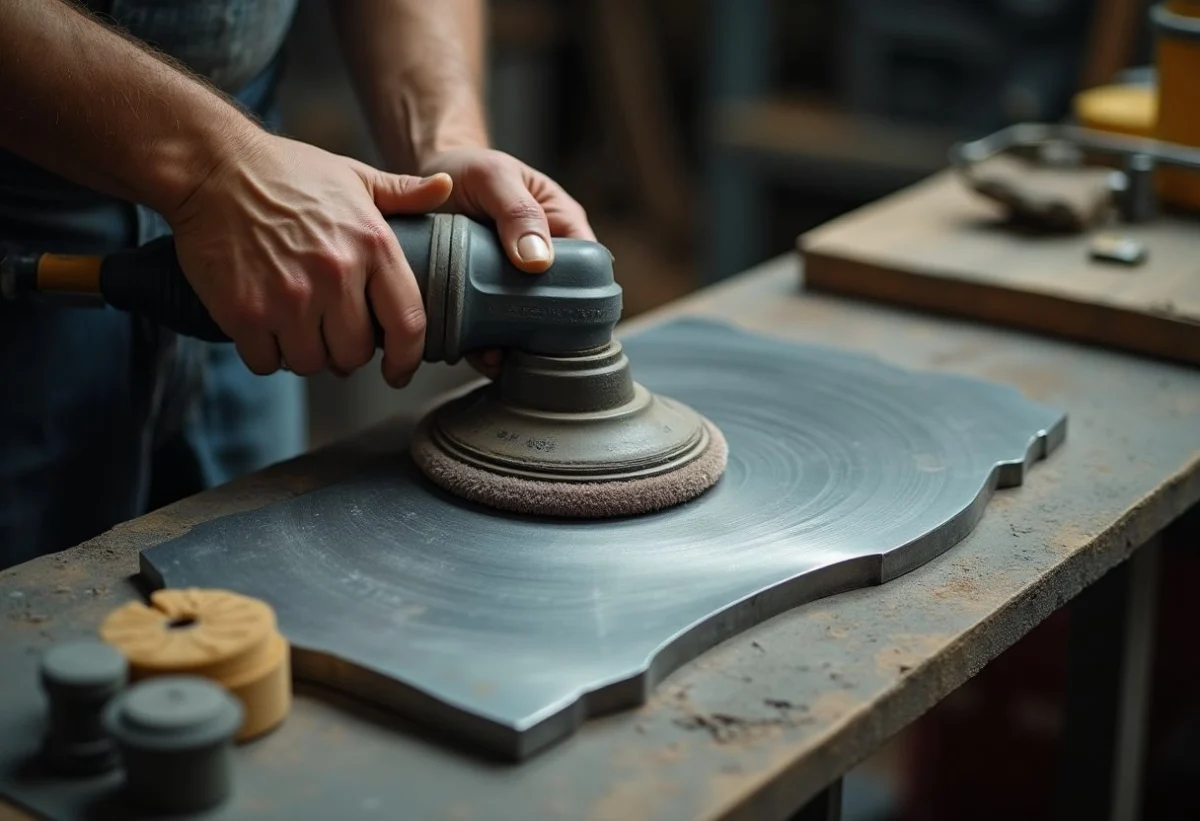
Techniques and tips for using a polishing disc effectively
Mastering polishing techniques is essential for achieving a flawless finish. Here are some tips to optimize the use of the polishing disc.
- Choose the right disc: opt for a disc suited to the material you wish to polish. For example, for a metal surface, an abrasive disc will be more appropriate, while a foam disc will be better suited for wood.
- Adopt the right speed: the rotation speed of the disc is a determining factor. For delicate materials, a slower speed is recommended to avoid overheating and achieve a uniform result.
- Apply even pressure: excessive pressure can damage the surface. It is preferable to apply light and constant pressure to ensure uniform polishing.
- Regularly clean the disc: regular maintenance ensures quality polishing. By cleaning the disc after each use, you will extend its lifespan and maintain its effectiveness.
Practical applications of the polishing disc
In the field of polishing, the polishing disc stands out for its multiple practical applications. Its adaptability makes it a favored tool among professionals.
Automotive bodies particularly benefit from this technology, offering a brilliant and flawless finish. Furthermore, metallurgical industries regularly use this tool to eliminate roughness from mechanical parts and ensure their proper functioning. In the field of jewelry, the polishing disc is essential for giving precious stones and metals an unmatched shine. Finally, woodworkers use it to refine wooden surfaces, revealing the natural beauty of the fibers.
In a world where aesthetics and surface perfection are paramount, the polishing disc proves to be an indispensable tool. Its ability to transform any surface into a smooth and shiny work of art makes it a prized companion for artisans and industrialists alike. Whether it’s to breathe new life into automotive bodies, perfect metal parts, or enhance wooden furniture, this tool continues to demonstrate its effectiveness and importance. Its versatility and adaptability ensure its prominent place in the arsenal of surface finishing professionals.